 Quiet Roamers
Field notes · Updated 19 October 2026
Osprey Rook 65 and deuter Aircontact Lite 50+10 on a 27 km two-day hike
Two mid-price hiking packs at 18–20 kg each, through a rainy day of forest and a foggy bog on the Aegviidu – Napu trail. How they carried, what each does better, and why we would buy both again.
Some links on this page go to Amazon. As an Amazon Associate we earn from qualifying purchases; it costs you nothing extra and does not change what we write. Everything here was bought with our own money.
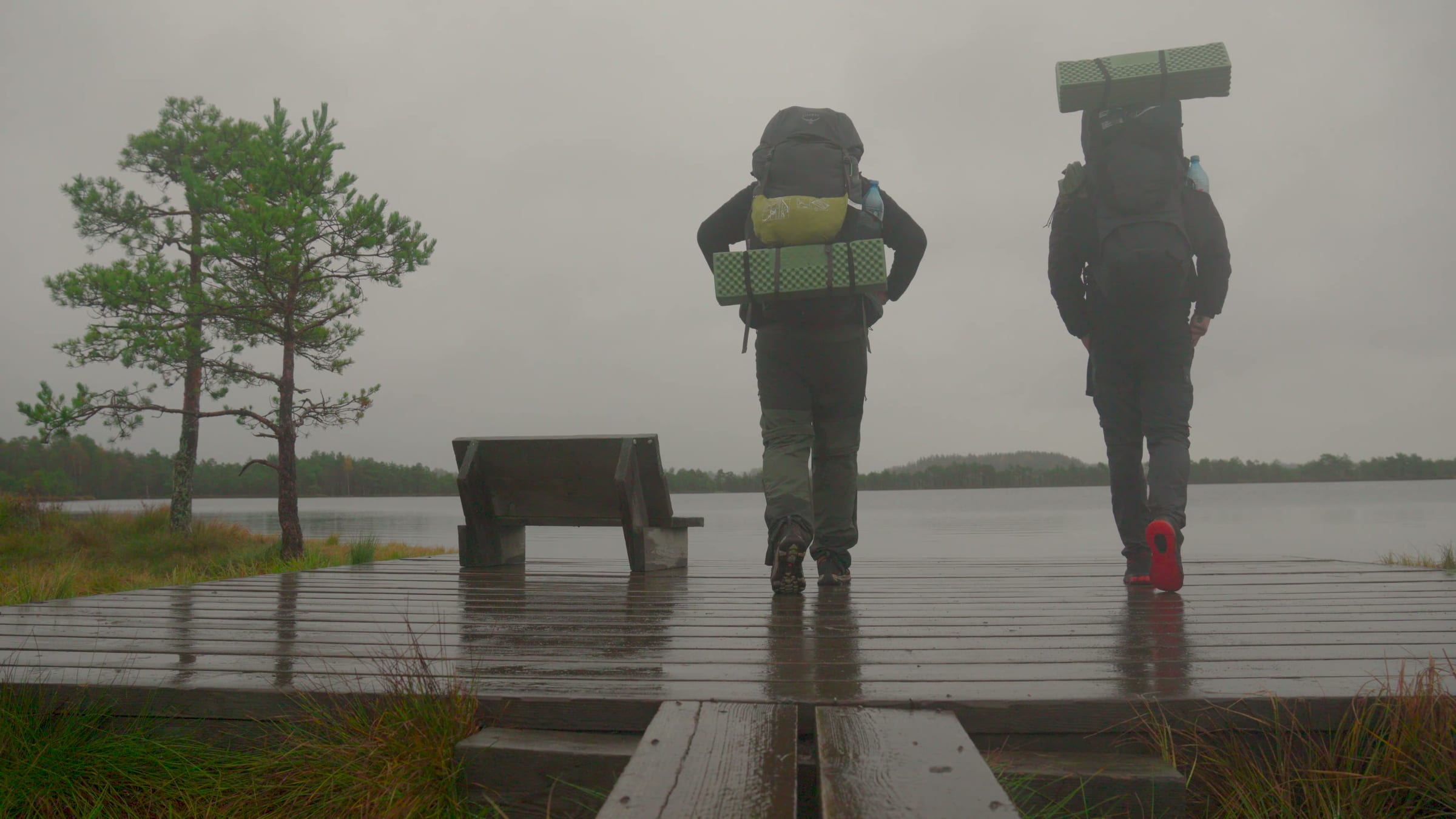
We carry two different packs: the Osprey Rook 65 and the deuter Aircontact Lite 50+10. On the Aegviidu – Napu hike, 27 km over two days with a night in an RMK lean-to, each weighed 18–20 kg; our gear is bulky rather than light, and two days of food, the camera kit and one tripod were on top of that. Day one was rain in the pine forest; day two crossed Kakerdaja bog in fog. These are notes from that trip, not a lab test. Both packs were bought at full price, from Amazon, after trying Fjällräven and other packs in a Tallinn outdoor shop that did not feel right on the back. It was a gamble on fit, and it paid off.
The two packs, and what went in each
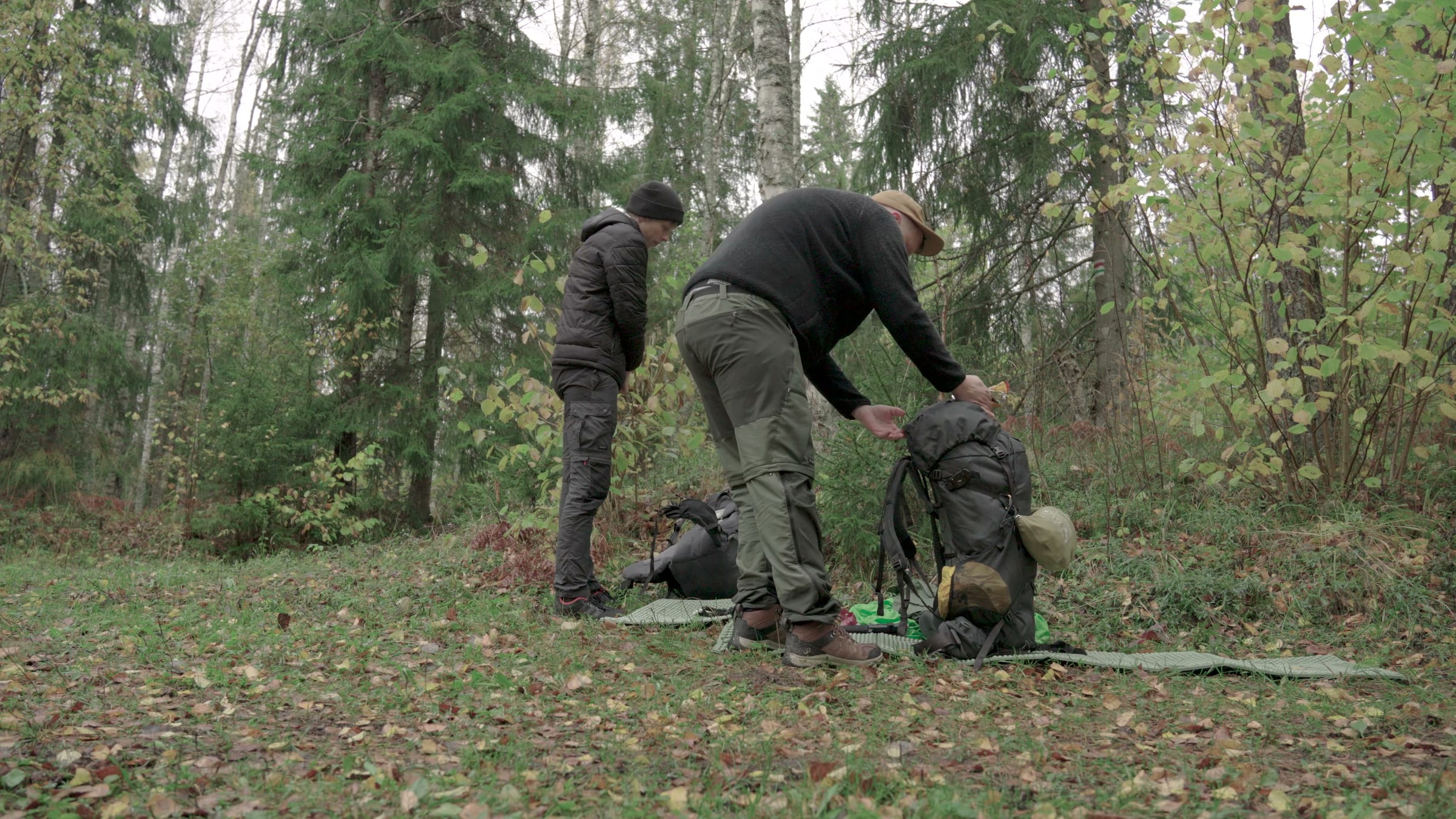
Osprey Rook 65 is Osprey's entry-level big pack: a 65-litre top loader with an adjustable torso length, a ventilated mesh back, a sleeping-bag compartment at the bottom and a rain cover in its own pocket. deuter Aircontact Lite 50+10 is a 50-litre pack with an extendable collar that adds 10 litres, deuter's padded back-contact system, a bottom compartment and a big stretch pocket on the front.
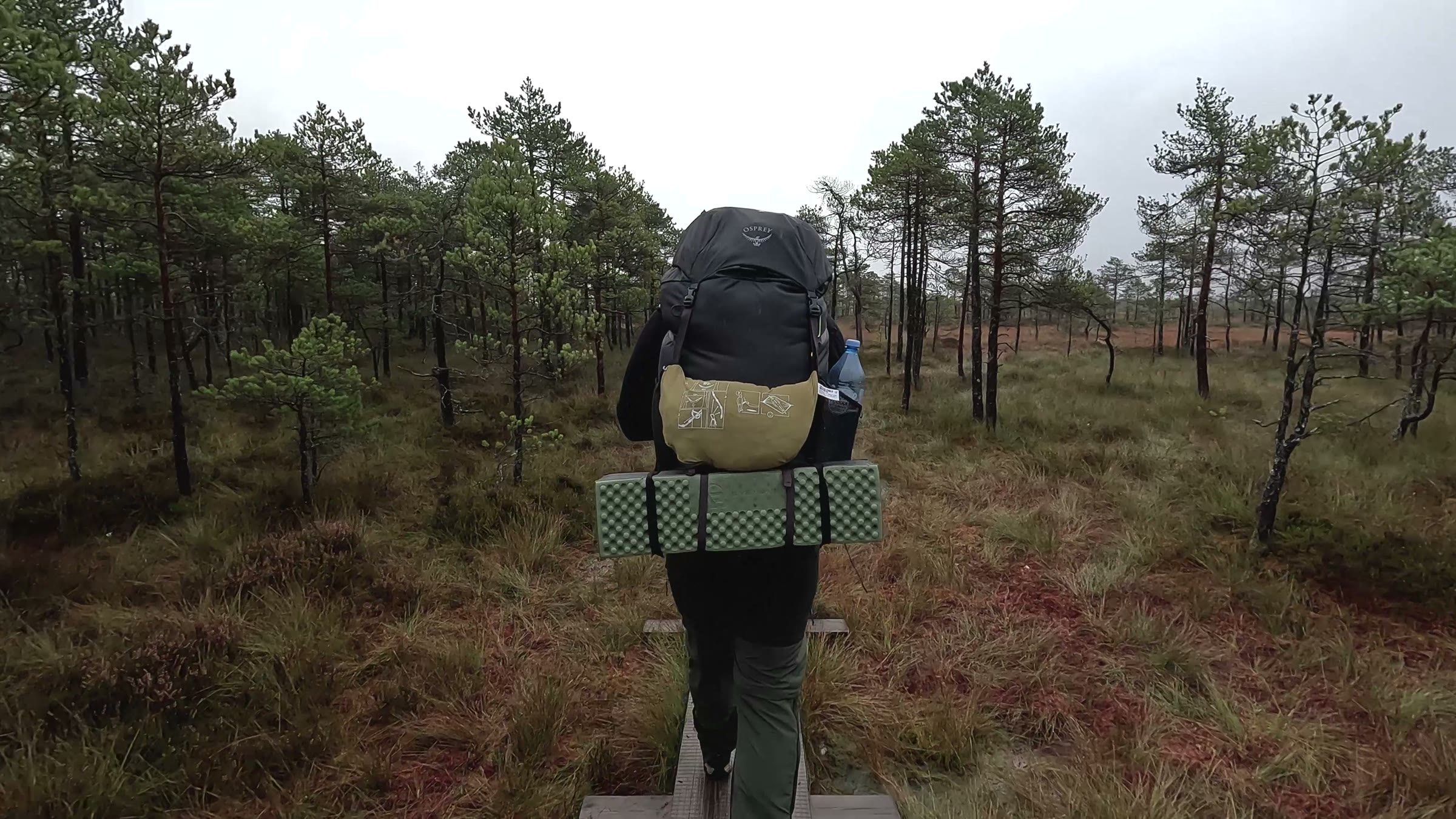
One of us carried the Osprey with the tent, a sleeping bag, clothes, a jacket and the cooking gear. The other carried the deuter with the sleeping mats, clothes and spare clothes in Decathlon dry bags, which kept them dry and clean for the whole trip. The Osprey is the wider of the two: the sleeping bag and the tent fit side by side in it, which they do not in the deuter.
Carrying 18–20 kg for 27 km
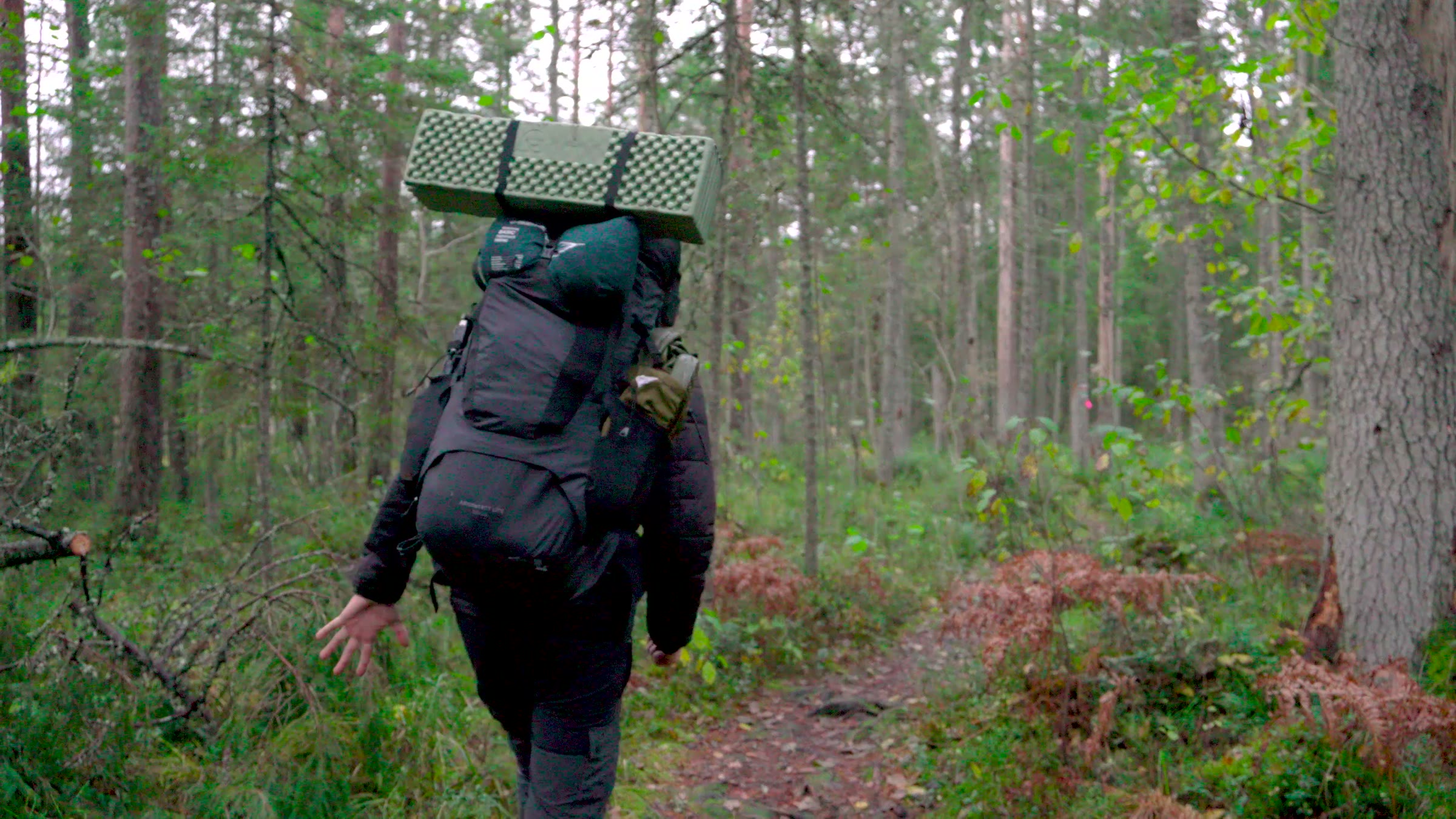
The summer before, we did a hike with military-style assault packs and felt every kilo in the shoulders. These two are a different thing. The weight sat on the hips both days, and neither of us finished with sore shoulders or a sore back. We were tired, of course, but a short rest was enough to go again, which is more than we could say about the summer. Nothing to complain about on comfort from either pack.
Between the two: the deuter's back pads and hip belt are the softer ones. The Osprey's mesh back breathes better and its harness suits wider shoulders. Both are comfortable; which is better depends on the back it is on.
Rain
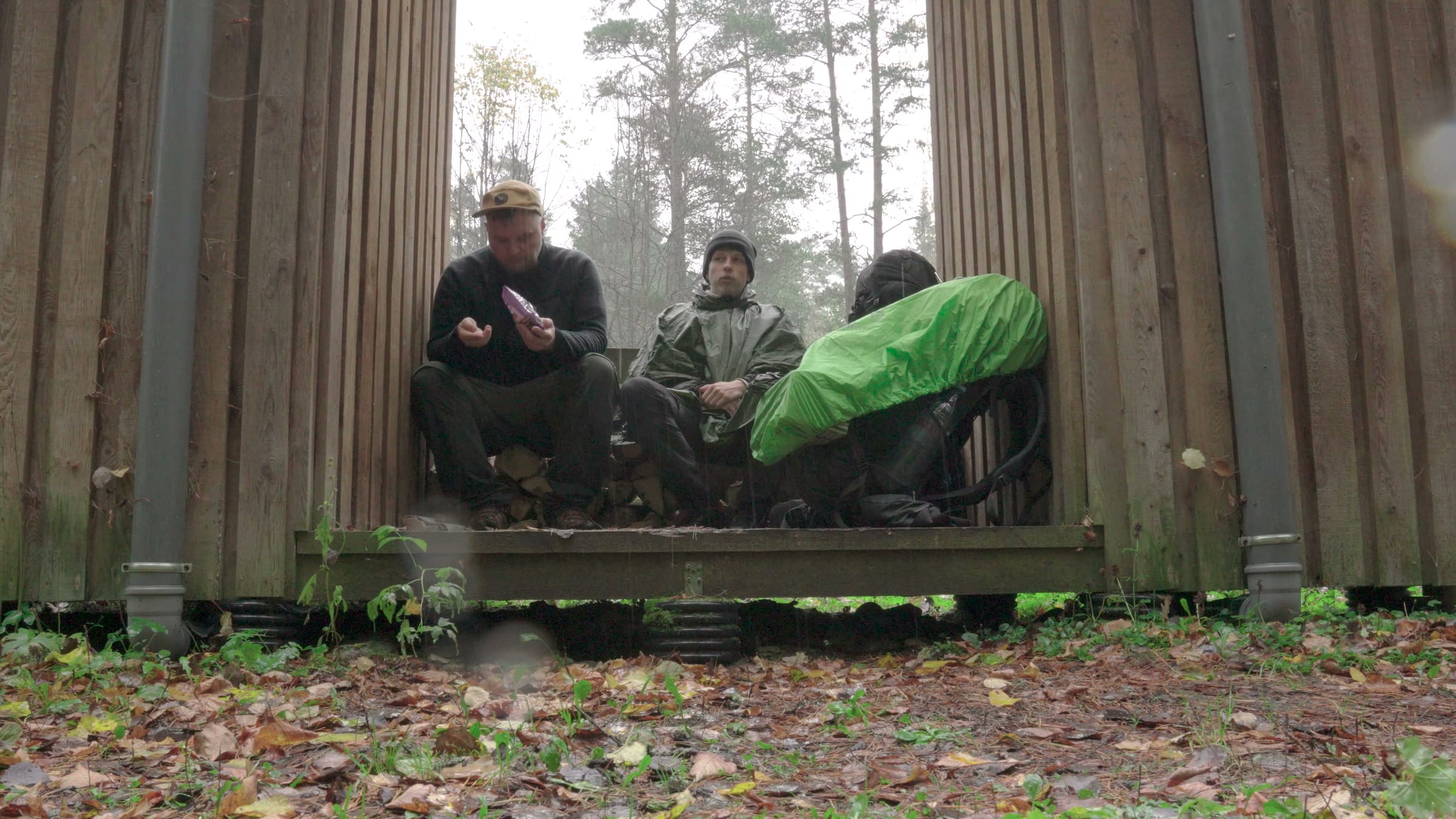
Day one rained for hours, not the heaviest rain but steady. The Osprey's own rain cover went on from the start; the deuter kept its load dry with the dry bags inside. By evening the outer fabric of both was damp and everything inside was dry.
Pockets, straps and the small things
A two-day hike means the pack is opened a dozen times: at the shelter for lunch, for the camera, for the coffee cup.
- Side pockets. Both have stretch side pockets for a bottle or anything you want in reach. The Osprey has fewer pockets overall; the deuter's big stretch pocket on the front is the one we used most, for whatever was wet or needed next.
- The sleeping mat. The Osprey has straps for it, so the foam mat goes on in seconds. On the deuter the mat hangs from small carabiners, which works but is slower.
- The bottom compartment. Both have one for a sleeping bag, and both were too small for our bulky bags, so we used the packs full-length instead. The divider closes with hooks on the Osprey and a zip on the deuter.
- Build. Both feel strong, not flimsy, after a wet two days.
Which we would buy again
Both. The Rook 65 for whoever has the wider shoulders and carries the tent: it swallows bulky gear and comes with the rain cover and mat straps. The Aircontact Lite 50+10 for whoever wants the softer back and hip belt and a compact pack that still extends by 10 litres when it has to. What we would change is not the packs but what goes in them: at 18–20 kg the next upgrade is lighter gear, not a different bag.
The packs go back on after lunch at 6:51 in the Aegviidu – Napu film; the deuter on the forest trail at 11:29, the Osprey on the bog boardwalk at 15:59.
The gear in this article
Osprey Rook 65
One of our two packs, 18–20 kg with the tent and two days of food on Aegviidu – Napu; the wider one, with a breathable mesh back.
deuter Aircontact Lite 50 + 10
The other pack on Aegviidu – Napu, about the same load; softer back pads and hip belt, and a big stretch pocket on the front.
As an Amazon Associate we earn from qualifying purchases. It costs you nothing extra.