 Quiet Roamers
Field notes · Updated 19 October 2026
Sleeping on a camp cot in a hot tent at −10 °C
Why we sleep on folding camp cots with detachable legs when we winter camp with a stove: off the frozen ground, light sleeping bags, what goes on top, and the one thing to be careful of.
Some links on this page go to Amazon. As an Amazon Associate we earn from qualifying purchases; it costs you nothing extra and does not change what we write. Everything here was bought with our own money.
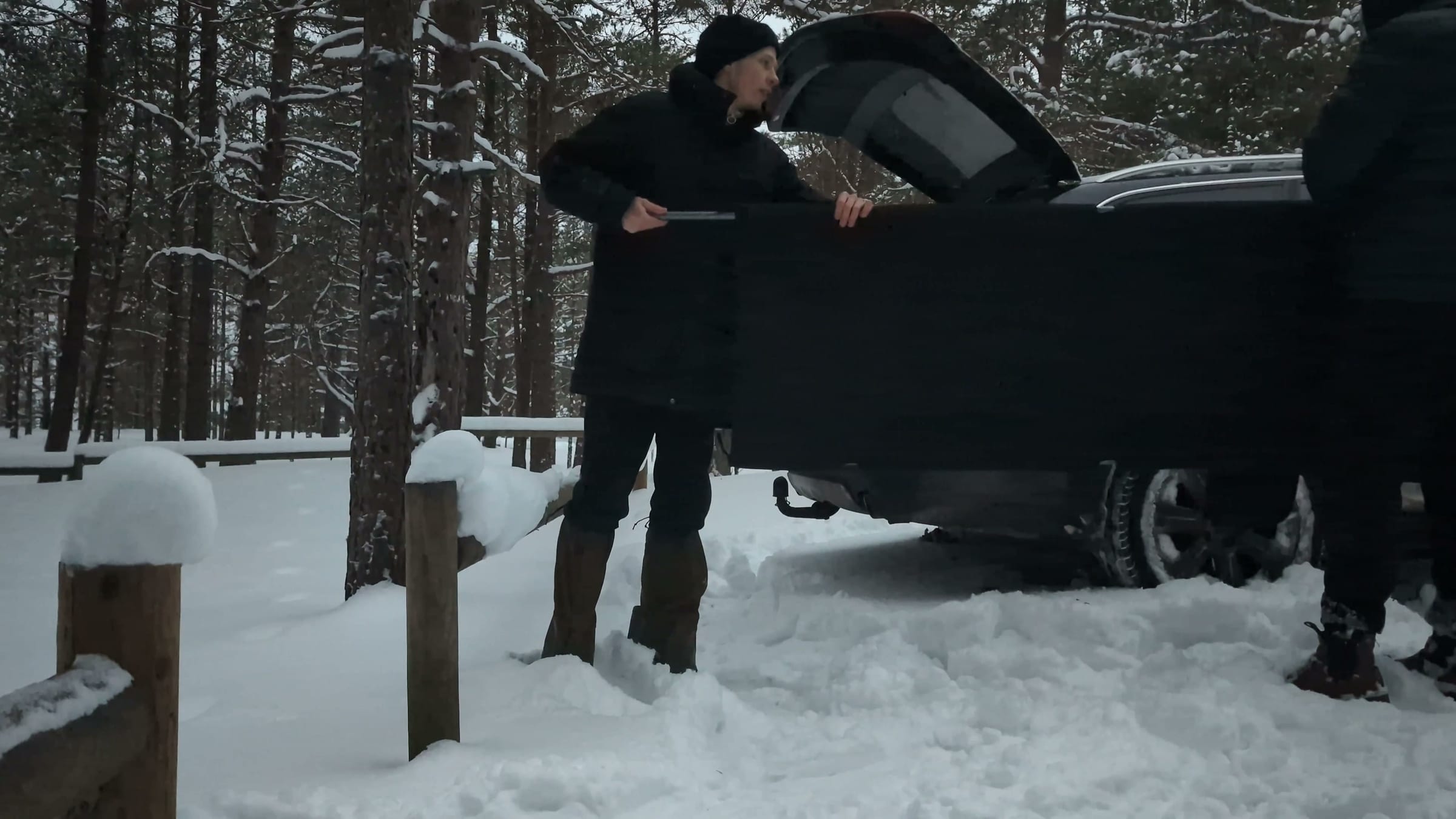
In a heated tent the problem is not the air, it is the floor. The stove gets the tent to room temperature; the ground under you is still frozen, and a sleeping pad alone fights it all night. On our winter camps with the hot tent we sleep on folding camp cots instead, and at Keibu, with −10 °C outside, it worked well enough that we never thought about the ground again.
Our cots
Folding steel-frame cots with detachable legs: the bed folds up, the legs come off, and the whole thing goes into a carry bag. Ours are similar to the Naturehike height-adjustable cot linked on this page, not the same model. They came to Keibu in the car with everything else; this is car-camping gear, and we would not carry one on a walking trip. On the Aegviidu – Napu hike we slept in an RMK lean-to without them.
What it was like at −10 °C
Inside the tent the lowest we saw was 18 °C with the stove going. On the cots we slept in ordinary sleeping bags rated around 5–20 °C and were warm. That is the whole case for a cot in a hot tent: once the ground is out of the equation, you can bring the bags you already own instead of a −20 °C down bag.
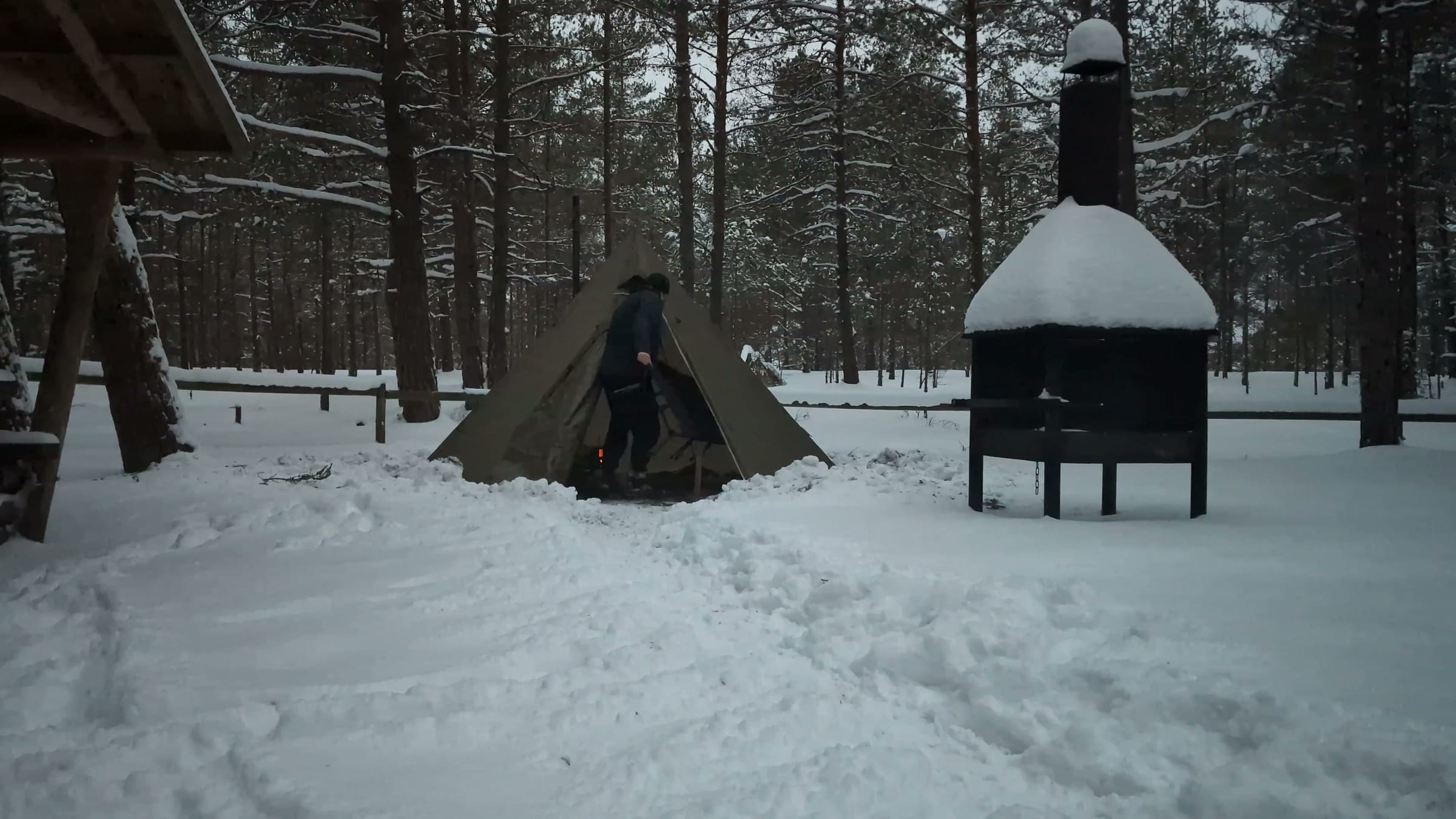
The cot also makes the tent liveable. You sit on it to take your boots off, your bag stays off the wet floor where the snow melts around the stove, and there is storage under it for the next armful of firewood and the food.
What goes on top
The cot fabric alone is firm, so we put a yoga mat on each cot for a little give. Next time the yoga mat goes under and a Decathlon self-inflating mattress on top; those mattresses have since come with us on hikes for sleeping in RMK huts, and they are warmer and softer than foam. A pad on the cot also covers the one weakness of a cot in the cold: there is air underneath you, and if the stove goes out at night the cot gets cold first.
What to be careful of
- Not very robust. The cots are fine to lie on, but the legs do not like a point load. If you are a heavier person, as one of us is, do not put your full weight on one leg when you sit down or get up; spread it or sit in the middle.
- Legs on snow. We cleared the snow down to a firm packed layer before pitching and stood the cots straight on it. On loose snow the legs sink and the cot sits crooked.
- Noise. Steel-frame cots creak when you turn over. In a tent with two people and a stove ticking as it cools it is background noise rather than a problem.
- Weight and bulk. Heavy and big when packed. Fine from a car boot, wrong for a pack.
Who they are for
Winter camps where you drive, or carry a short way, to the site and heat the tent. If that is you, a cot with detachable legs is the cheapest upgrade to a winter night we know: it costs less than a serious winter sleeping bag and makes the bag you already own enough.
The night is in the film on the Keibu hot tent page; moving in for the night starts at 5:24.
The gear in this article
Folding camp cot with detachable legs
Off the frozen ground and away from the cold, with a mat on top. Fine to lie on; go easy on a single leg when you sit down. Ours are similar to this one.
As an Amazon Associate we earn from qualifying purchases. It costs you nothing extra.