 Quiet Roamers
Field notes · Updated 19 October 2026
Our hot tent stove after two winters: what works, what we would change
A steel tent stove in a tipi hot tent at −10 °C: how long it keeps a tent warm, what the ash does to your night, the carbon monoxide alarm that went off, the chimney parts that warped, and what we would buy differently.
Some links on this page go to Amazon. As an Amazon Associate we earn from qualifying purchases; it costs you nothing extra and does not change what we write. Everything here was bought with our own money.
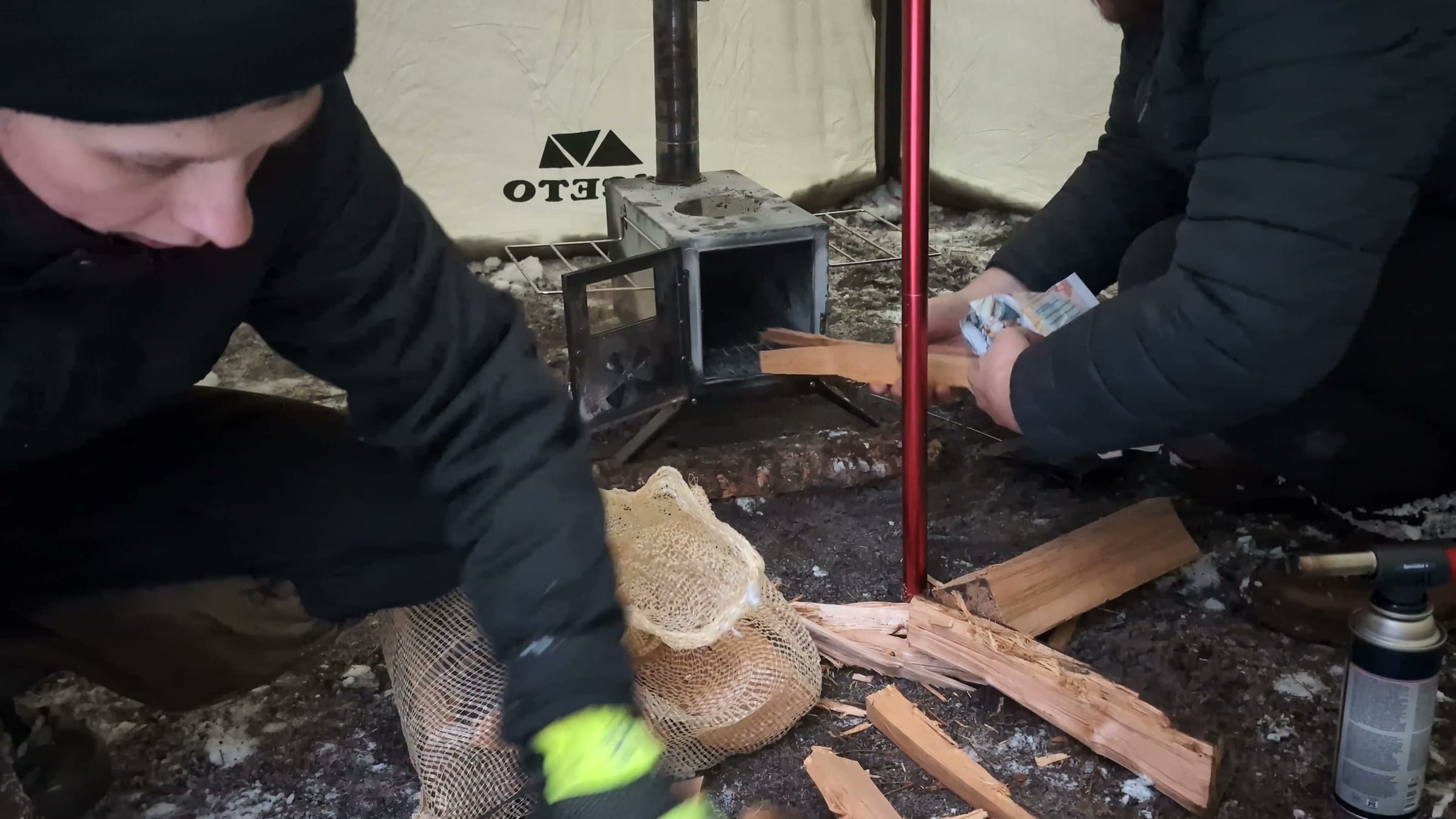
We have slept two winters in a tipi hot tent with a small steel wood stove, most recently at Keibu campfire site on the north-west coast with −10 °C outside. This is what the stove actually did, measured with a thermometer and a carbon monoxide alarm rather than remembered fondly. Nothing here was given to us.
The stove
A box stove with a glass door, an air damper, two fold-out side shelves and a telescopic chimney; a spark arrestor sits on top of the chimney. It is the common design sold under many names, and the Amazon listing on this page is a near twin of ours in size and layout, not the same brand. Packed, it is the size of the firebox: every chimney section goes inside it, which is what makes it carry well in a car boot.
What it does in a 4 m tipi
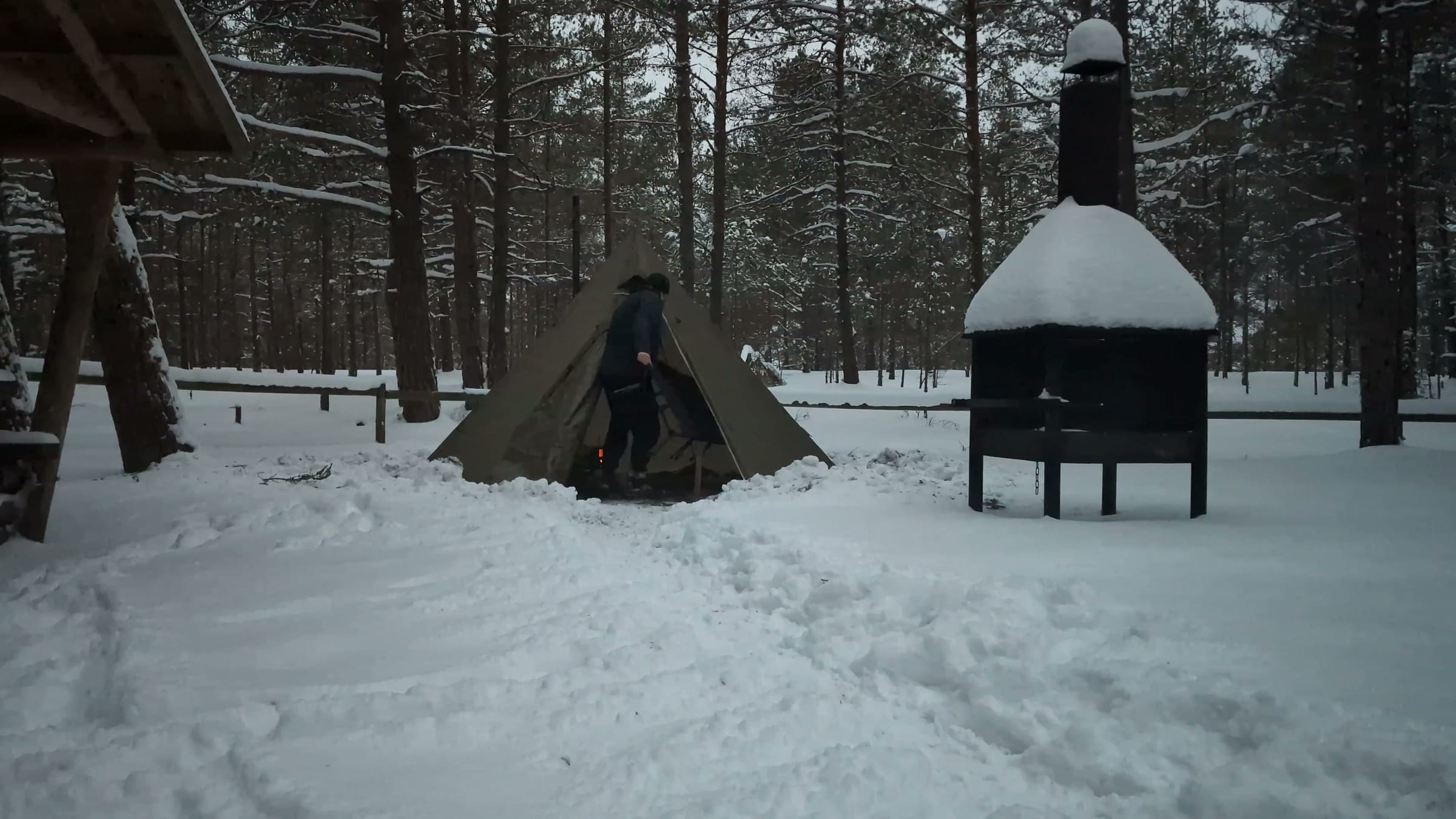
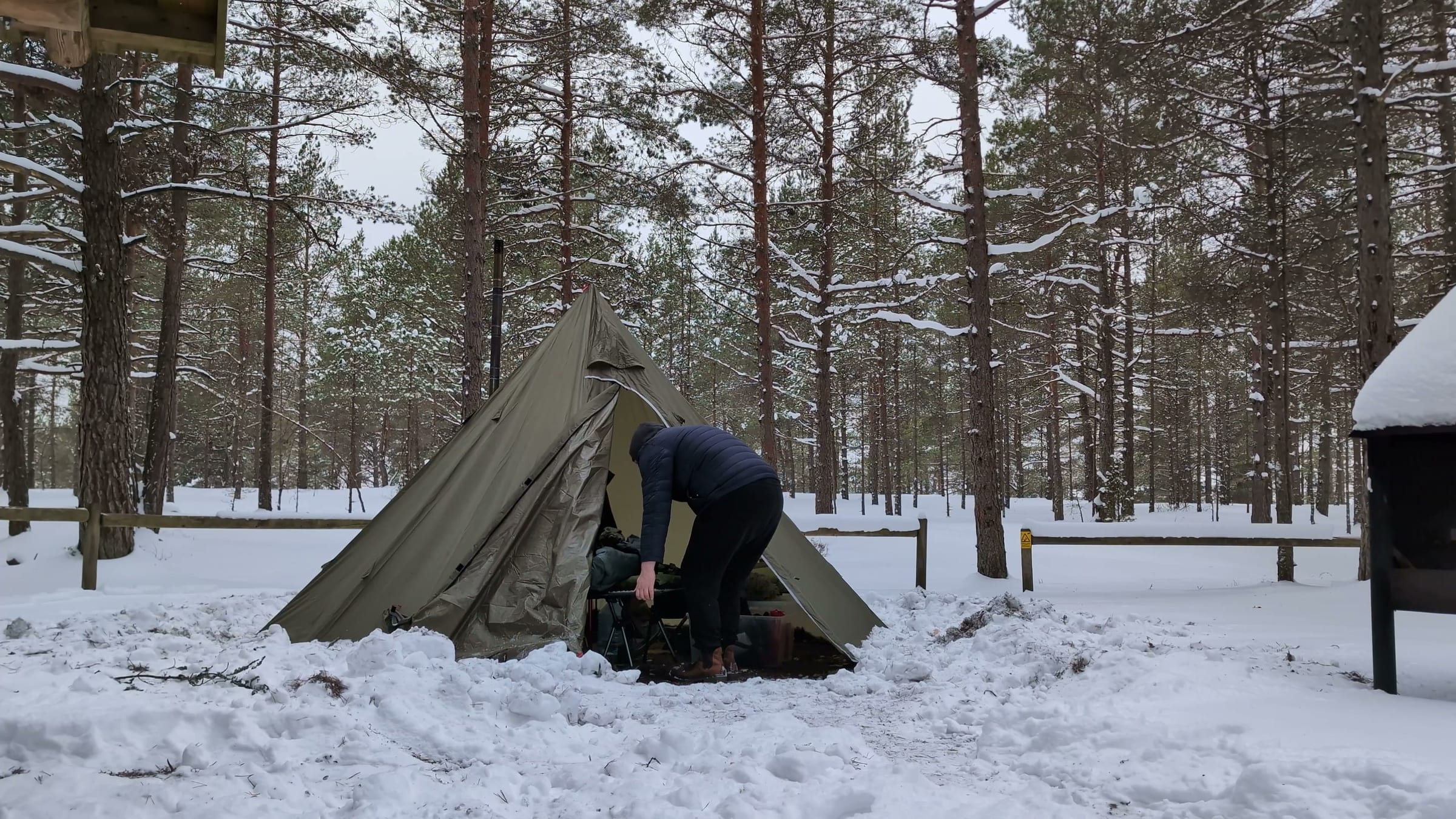
The tent is an MCETO TX400 Ultra, a height-adjustable tipi 4 m across and 2.2 m high at the peak, with a stove jack in the wall. With −10 °C outside, the lowest temperature we saw inside the tent was 18 °C. That is in ordinary sleeping bags rated for 5–20 °C, on camp cots off the frozen ground, and it was warm enough that nobody wanted a thicker bag.
The number comes with a condition: the stove only holds that temperature while someone feeds it. A firebox this small burns a load of split wood in a couple of hours, so one of us got up in the night to add wood. If you want to sleep through, you need a bigger stove, or you accept a cold tent by morning.
Firewood: split it small
A small stove burns small, dry pieces far better than logs. We split everything down to wrist thickness or less and kept the next armful inside the tent, where it stayed dry and warmed up before it went in. RMK asks visitors who arrive by car to bring their own firewood, and we did; the woodshed at the campfire site is for people who come on foot.
The ash problem
This is the thing nobody mentions in the listings. After a few hours of burning, the firebox is already half full of ash, and by bedtime there is little room left for wood. Our stove has no ash drawer, so the only way to keep the fire going through the night is to scoop the ash out through the door, hot, in the dark. We managed it, but it is the first thing we would change: the next stove has an ash drawer, so you pull it out, empty it, and the fire keeps burning.
The second change is already made. We bought a heat-powered stove fan, the Mustang fireplace fan from an Estonian shop; it sits on the stove top and spins from the heat with no batteries, to push the warm air around the tent instead of letting it collect under the peak. We have not used it on a trip yet.
Two winters of wear
- The finish. The black coating has not survived the heat; the stove is bare metal now where it gets hottest. Cosmetic, but expect it.
- The glass is still fine and still clear after a wipe.
- The chimney pipes have warped with the heat. They still go together and still draw, but they are no longer perfectly round, and packing them into each other takes more care than it did new.
- The damper on the chimney is a tiny ring the size of a key ring. It gets hot and it is hard to make a fine adjustment with gloves on. A proper handle would be worth paying for.
- The spark arrestor on top restricts the draught in some conditions. In damp weather or with low air pressure the stove smokes and sulks with it on, so we take it off then and keep a closer eye on the roof.
Carbon monoxide: the alarm went off
To keep the sea wind out we had shovelled deep snow against the outer skirt of the tent. It stopped the draught, and it also sealed the fresh-air intake along the bottom. In the night the carbon monoxide alarm went off. We opened the vents, the reading dropped, and nobody was hurt. Without the alarm we would not have known.
Cooking on it
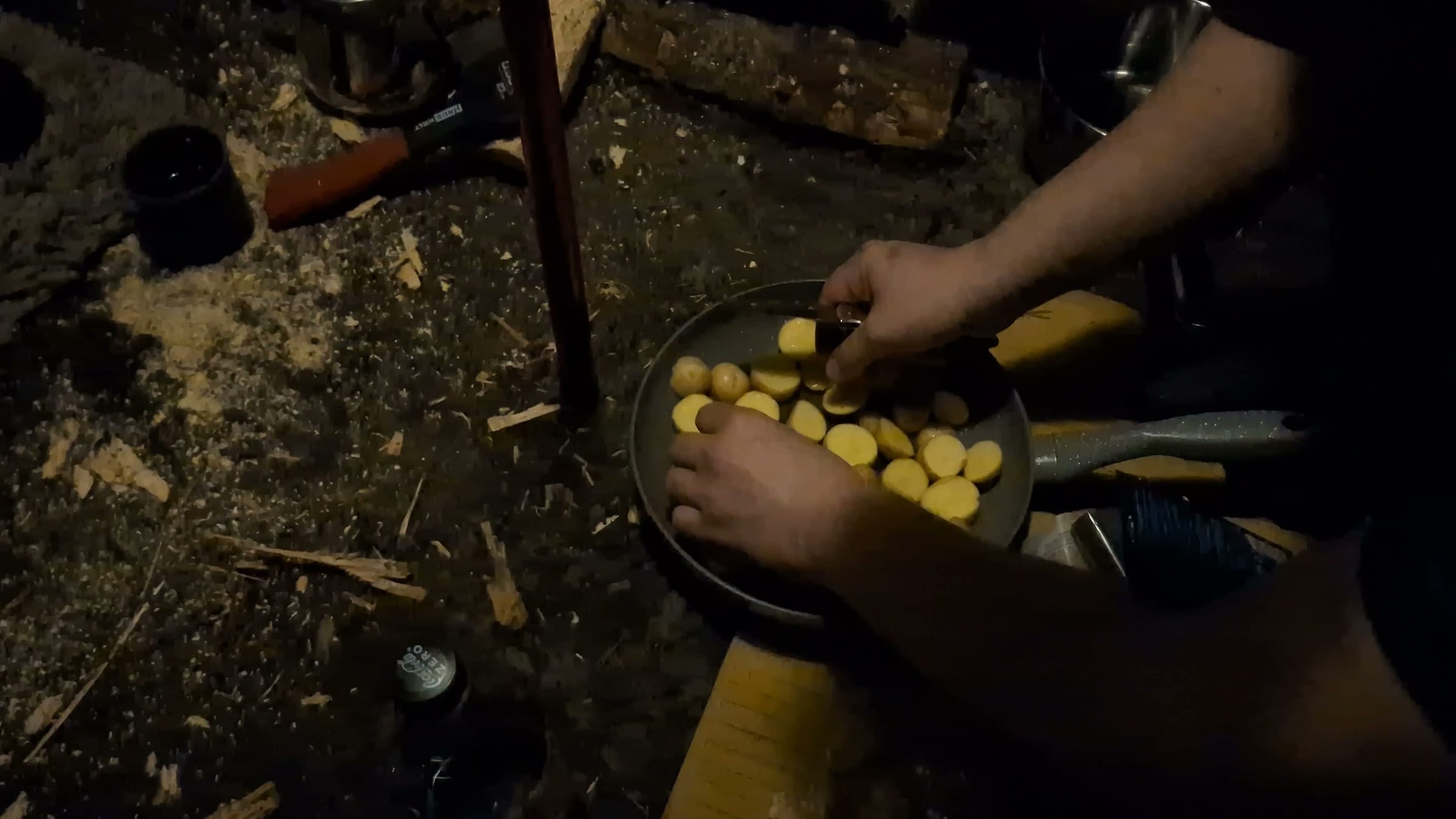
The stove top is the kitchen. Dinner was beef, potatoes and garlic in one pot; breakfast was ham and eggs in the pan. Both took longer than on a gas stove, which is fine when you are not going anywhere. We brought all our water from home; melting snow on a stove this size is slow.
Who this stove is for
Two people, a tipi up to about 4 m, car or short carry to the site, nights down to about −10 °C, and someone willing to get up once in the night. For colder nights, longer burns or sleeping through, look at a bigger firebox and, above all, an ash drawer. For what it cost, the stove has been good: two winters, warm tent, dinner on top every time. The wear is in the chimney and the finish, not in the box itself.
The whole night is in the film on the Keibu hot tent page: the stove and chimney go together at 1:51, firewood and lighting at 4:28.
The gear in this article
Stainless-steel tent stove
Ours is a near twin of this one: glass door, air damper, fold-out side shelves and a telescopic chimney that packs inside the firebox. After two winters the chimney pipes have warped and the black finish is gone; the next one has an ash drawer.
MCETO TX400 Ultra hot tent
Height-adjustable tipi, 4 m across and 2.2 m high, with a stove jack. Warm enough to sleep in light bags at −10 °C outside. Ours is MCETO's TX400 Ultra, which Amazon does not sell in Europe; the link is a similar flame-retardant tipi hot tent with a stove jack.
As an Amazon Associate we earn from qualifying purchases. It costs you nothing extra.