 Quiet Roamers
Camp · Lääne-Harju coast · 16–17 January 2026 · 2 days
Keibu hot tent, −10 °C
A winter night in a hot tent at Keibu RMK campsite on the north-west coast: wood stove, one-pot dinner, and a carbon monoxide alarm in the night
The route
11 photos pinned on the map
No GPS track for this trip; the map shows where we camped.
Photos
Trail guide
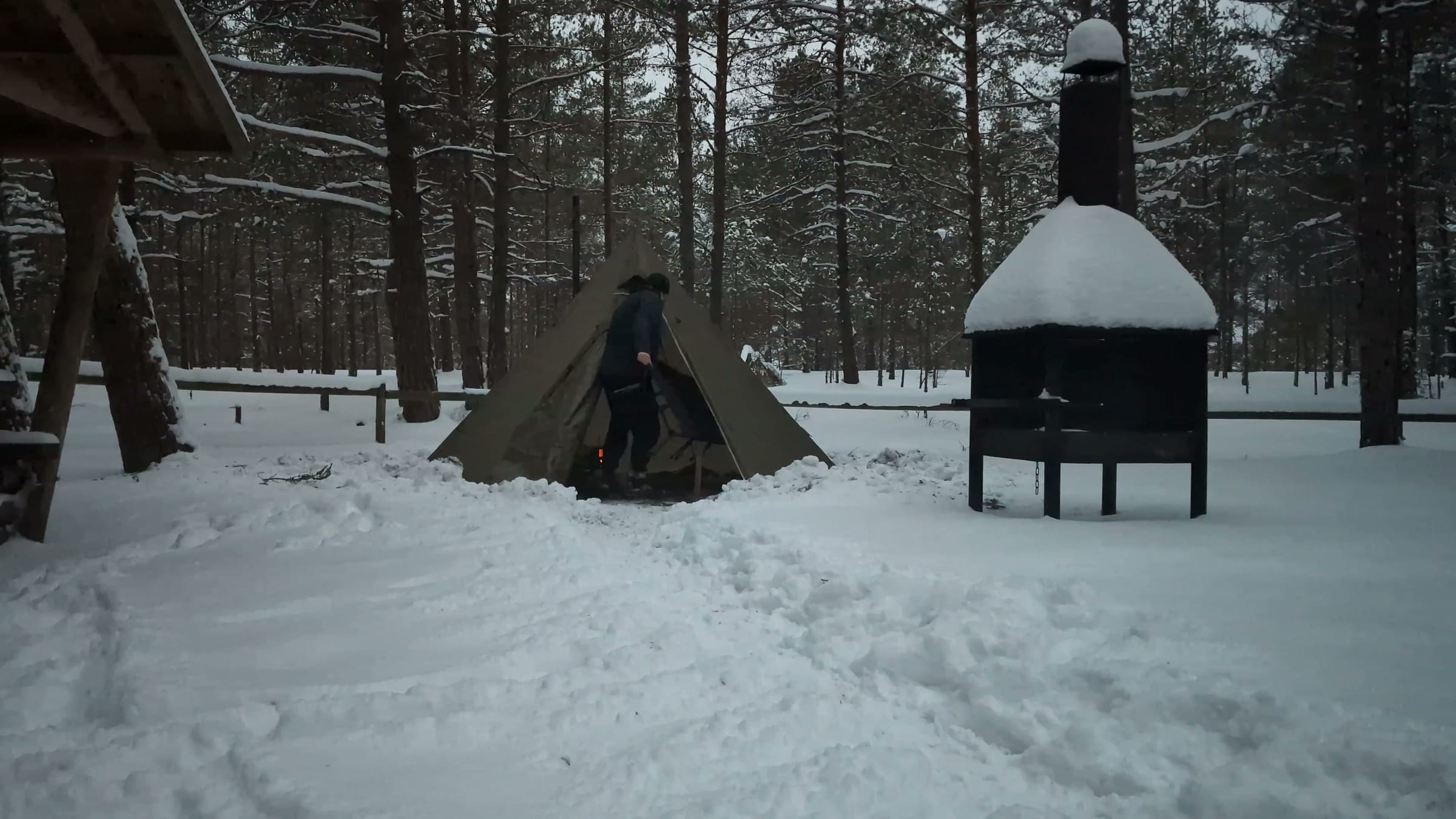
Our second winter test of the MCETO hot tent, at Keibu campfire site on the coast west of Tallinn, with the thermometer at −10 °C. We cleared the snow, raised the tent, put the stove and chimney together, split firewood, cooked dinner and breakfast on the stove top, and walked down to the frozen sea in the dark. In the night the carbon monoxide alarm went off. This page is the practical side of that night: the place, the setup, staying warm, and what we now do differently.
The place: Keibu campfire site
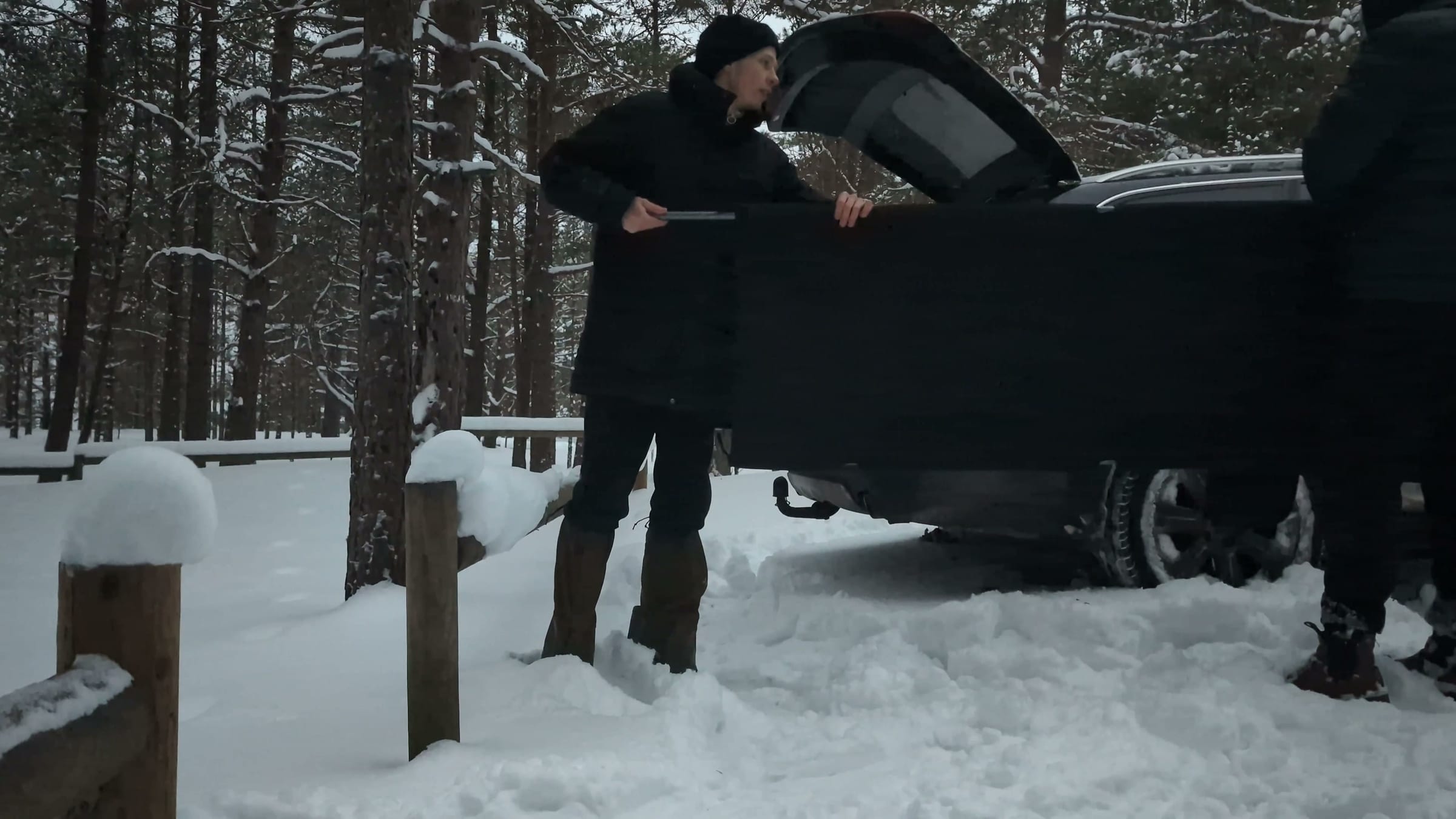
Keibu lõkkekoht I is an RMK campfire site on Keibu bay, inside the Nõva nature reserve on the north-west coast. It has two covered fire pits, a covered table, a woodshed, a dry toilet and two boardwalks down to the sea, with parking for eight cars and room for six four-person tents. A second, smaller site, Keibu lõkkekoht II, is 600 m further along with one covered fire pit. In summer the beach is sand; in January it was ice and snow to the waterline.
Getting there: by car, through Keila towards Haapsalu to the Määra junction (47 km from Tallinn), then about 2.5 km to the site, following RMK's directions. RMK asks people who arrive by car to bring their own firewood, and we did. Leave the woodshed for people who come on foot; we rely on it ourselves when we walk, as on the Aegviidu – Napu hike. The sites are free and shared; there is no booking.
Setting up a hot tent on snow
- Clear a platform. We shovelled the snow down to a firm layer the size of the tent plus a margin for the stove side. A level, packed floor matters more than bare ground.
- Pitch and peg. Snow stakes or buried deadmen hold better than normal pegs in loose snow.
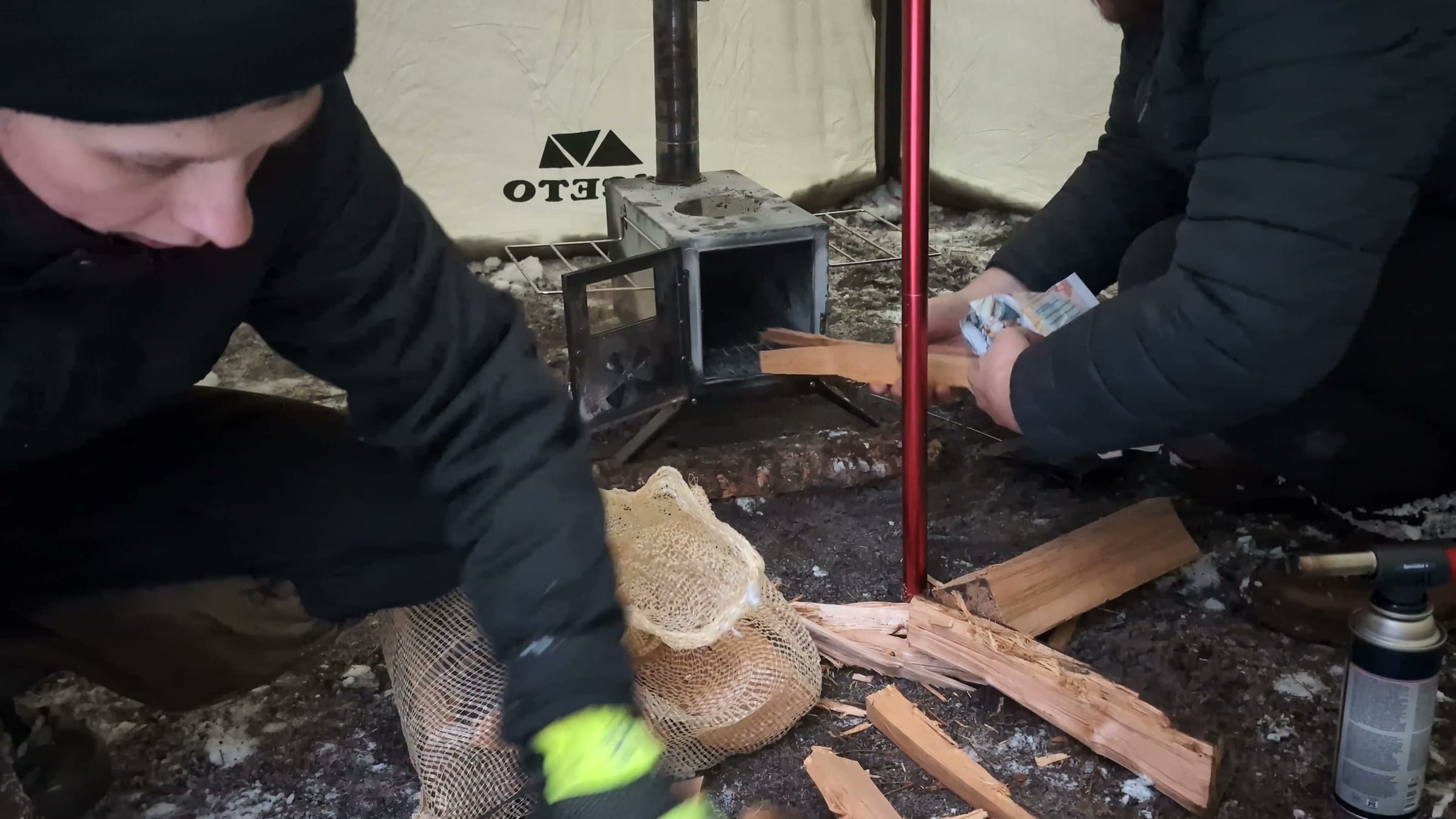
- Stove and chimney. The tent is an MCETO TX400 Ultra, a height-adjustable tipi hot tent, 4 m across and 2.2 m high at the peak, with a stove jack in the wall. The stove is a stainless-steel box stove with a glass door, an air damper, fold-out side shelves and a telescopic chimney. Assemble the chimney outside, feed it through the jack, fit the spark arrestor on top, and stand the stove on a fireproof mat so it does not melt into the floor snow.
- Firewood. Split it small: a tent stove burns small, dry pieces far better than logs. Keep the next armful inside the tent so it is dry and warm when you need it.
Staying warm at −10 °C
We slept on camp cots with detachable legs, off the frozen ground, in ordinary sleeping bags rated around 5–20 °C. That was enough, because the tent stayed warm: with −10 °C outside, the lowest we saw inside was 18 °C.
The catch is that a tent stove only keeps it that warm if someone feeds it, so we got up in the night to add wood. The other catch is ash. After a few hours of burning, the firebox is already full of it, so by bedtime there is little room left for wood. Our stove has no ash drawer, which means scooping the ash out through the door before you can keep the fire going through the night. We managed this time, but the next stove will have an ash drawer. We have also added a heat-powered stove fan, which needs no batteries, to move the warm air around the tent next time.
Hang wet gloves and boots high near the stove, never on it.
Carbon monoxide: what happened
To keep the sea wind out we had shovelled deep snow against the outer skirt of the tent. It stopped the draught, and it also sealed the fresh-air intake at the bottom. In the night the carbon monoxide alarm went off. We opened the vents, the reading dropped, and nobody was hurt.
Cooking on the stove
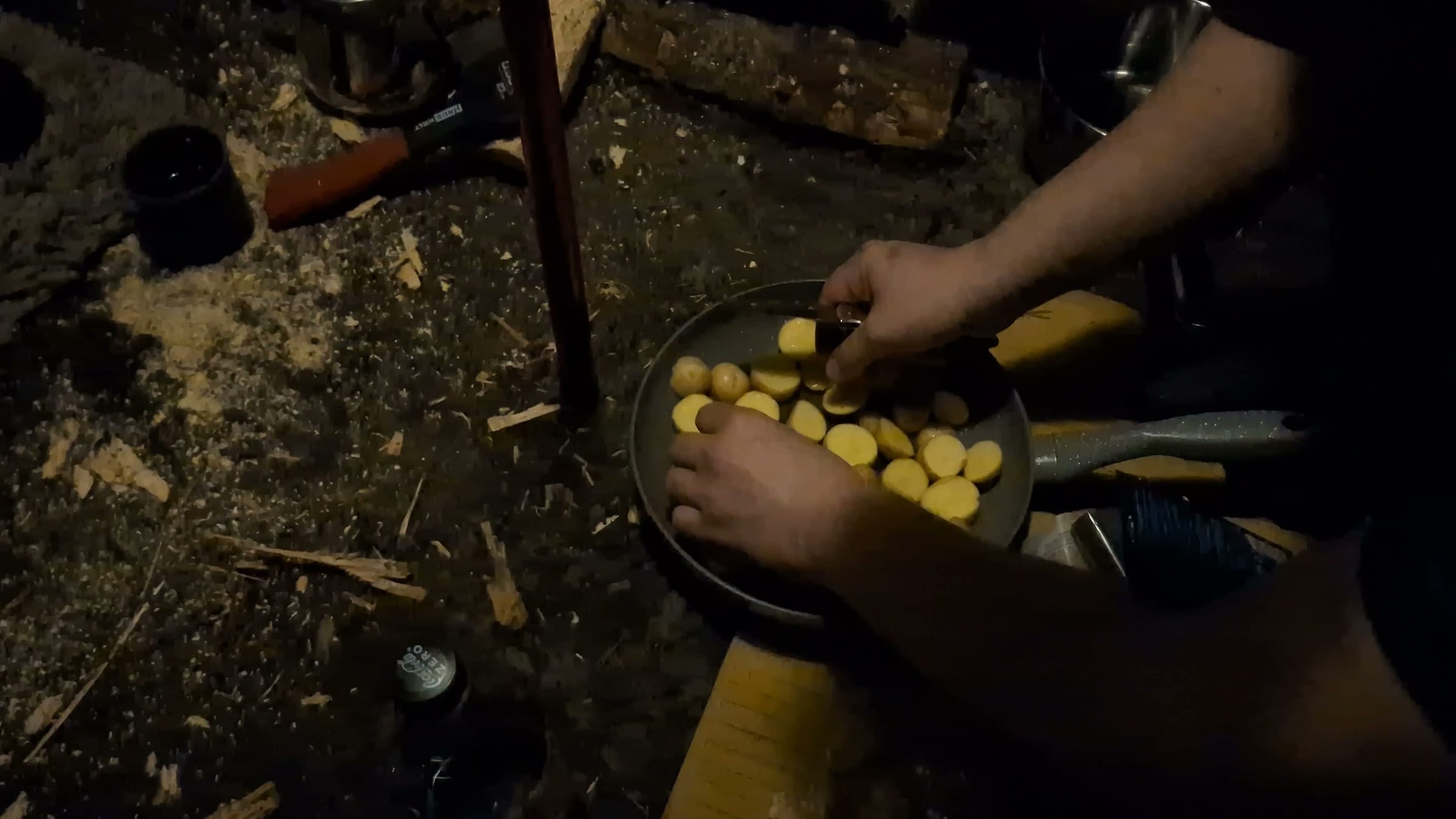
The stove top doubles as the kitchen. Dinner was beef, potatoes and garlic in one pot; breakfast was ham and eggs in the pan. We brought all our water from home rather than melting snow, which is slow on a small stove.
The film
The 16-minute film is at the top of this page and on YouTube; it was shot on a Google Pixel 8 Pro, before we had the a6700.
- 0:00 Arriving at Keibu RMK campsite
- 0:29 Clearing snow and raising the tent
- 1:51 Putting the stove and chimney together
- 4:28 Splitting firewood and lighting the stove
- 5:24 Moving in for the night
- 8:04 One-pot dinner on the stove
- 9:55 Night walk by the sea
- 10:55 Breakfast on the stove
- 13:04 The frozen coast in daylight
- 13:54 Packing up
RMK's rules for campfire sites: fire only in the marked fire pits and only when fire is allowed, quiet hours 23:00–6:00, dogs on a lead. For a summer trip with a long walk instead, see our Aegviidu – Napu guide.
What we carried
All our gear →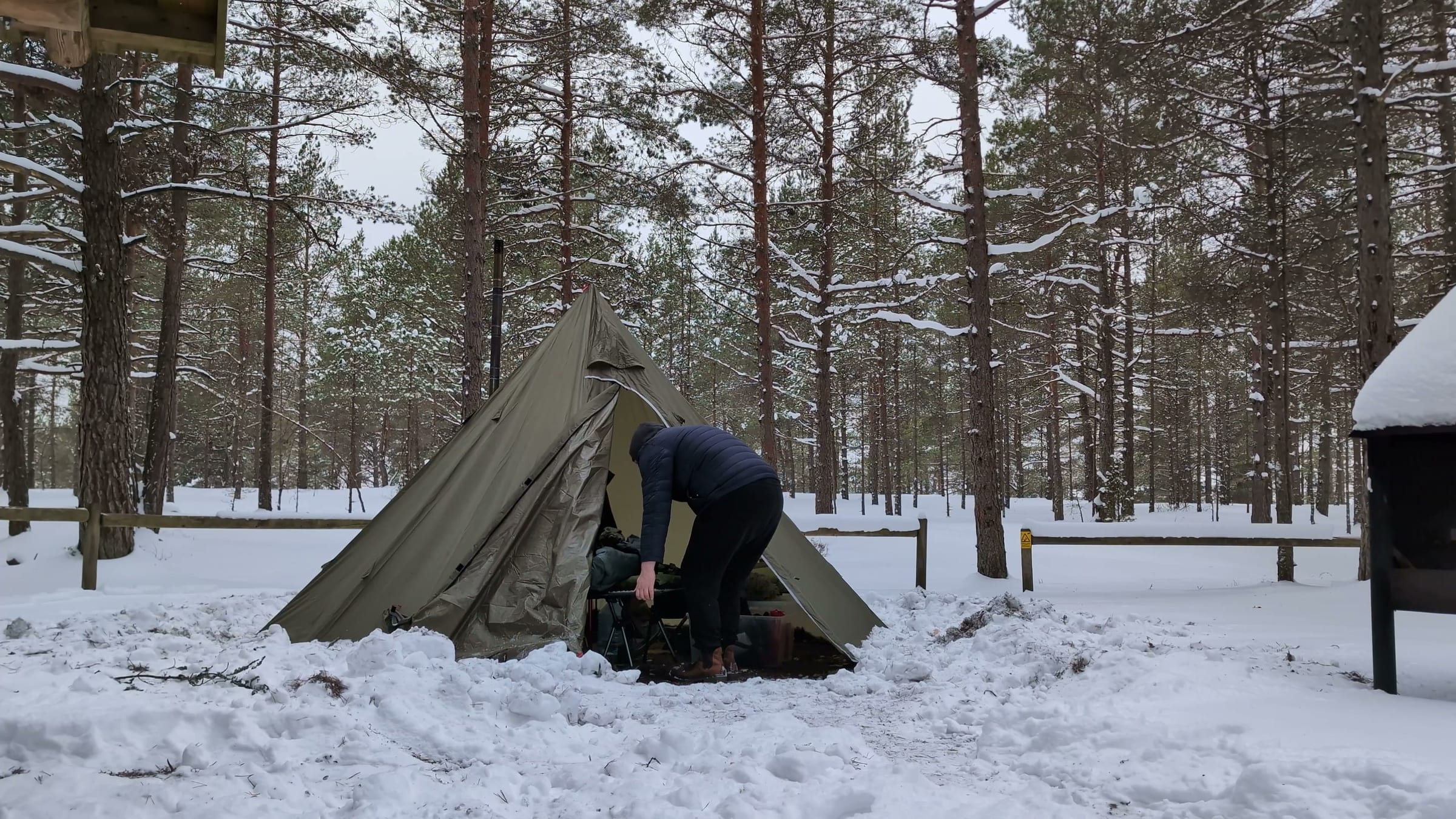
MCETO TX400 Ultra hot tent
Height-adjustable tipi, 4 m across and 2.2 m high, with a stove jack. Warm enough to sleep in light bags at −10 °C outside. Ours is MCETO's TX400 Ultra, which Amazon does not sell in Europe; the link is a similar flame-retardant tipi hot tent with a stove jack.
Stainless-steel tent stove
Ours is a near twin of this one: glass door, air damper, fold-out side shelves and a telescopic chimney that packs inside the firebox. After two winters the chimney pipes have warped and the black finish is gone; the next one has an ash drawer.
Folding camp cot with detachable legs
Off the frozen ground and away from the cold, with a mat on top. Fine to lie on; go easy on a single leg when you sit down. Ours are similar to this one.
As an Amazon Associate we earn from qualifying purchases. It costs you nothing extra.
More hikes
 ▶ film
Hike · Kõrvemaa · 9–10 October 2026 · 2 days · 27 km
Aegviidu – Napu
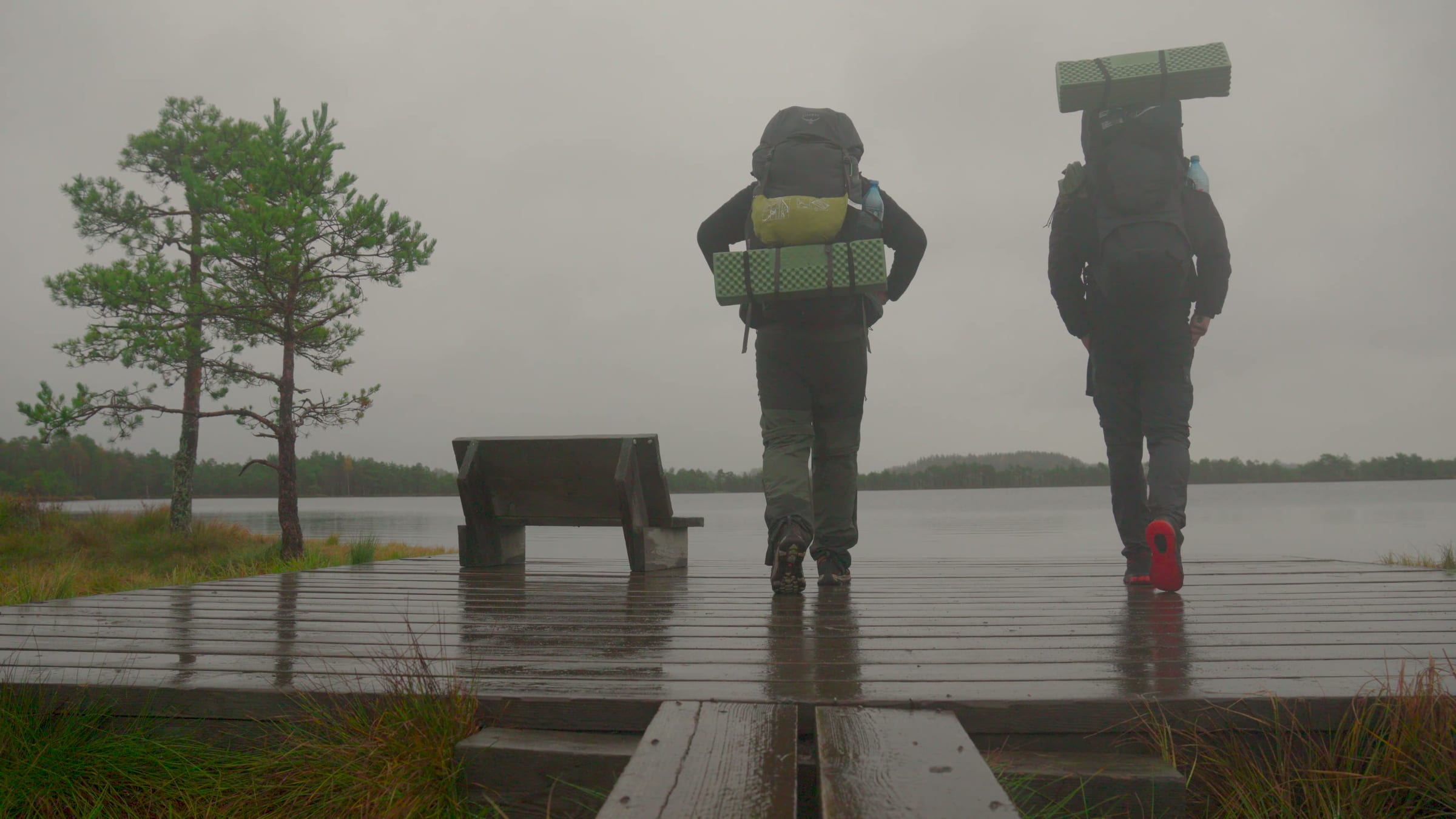
27 km in two days on the RMK Oandu–Ikla trail through Kõrvemaa: pine forests in the rain, a night at Noku shelter, and Kakerdaja bog in thick morning fog.
Hike · Kõrvemaa · 1–2 August 2026 · 2 days · 15.7 km
Järvi – Aegviidu
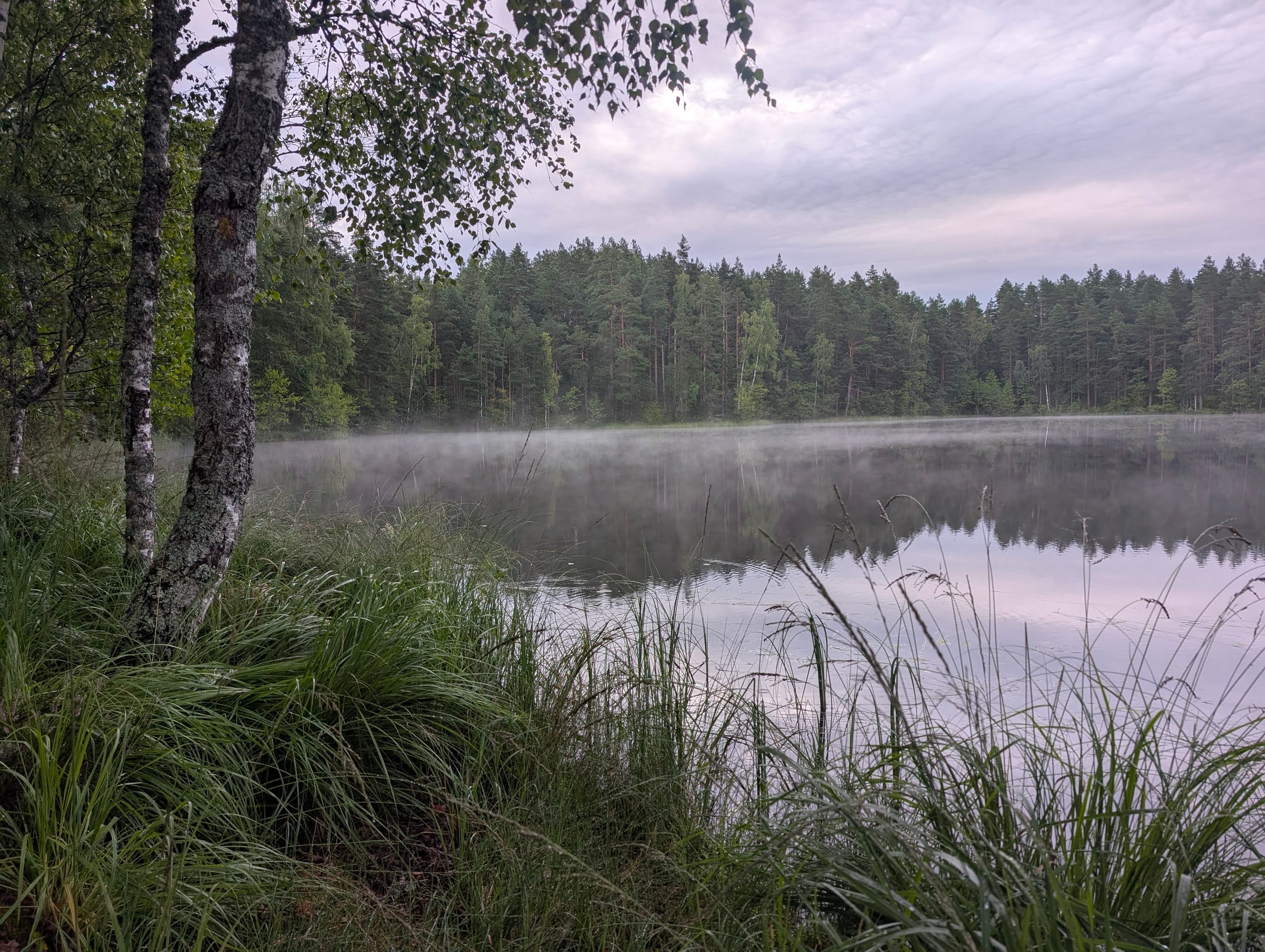
Two days on the RMK trail through Kõrvemaa's lakes and pine forests, finishing at Aegviidu station.