 Quiet Roamers
Guide · Updated 24 October 2026 · By Gert Orasmäe and Siim Orasmäe
Hot tent camping: what it is, how the stove works, and what two winters taught us
A hot tent is a tent with a wood stove in it. Two Estonian winters in a 4 m tipi at −10 °C, with a thermometer and a carbon monoxide alarm: how warm it really gets, what the stove needs from you at night, the mistake that set the alarm off, and what we would buy again.
Some links on this page go to Amazon. As an Amazon Associate we earn from qualifying purchases; it costs you nothing extra and does not change what we write. Everything here was bought with our own money.
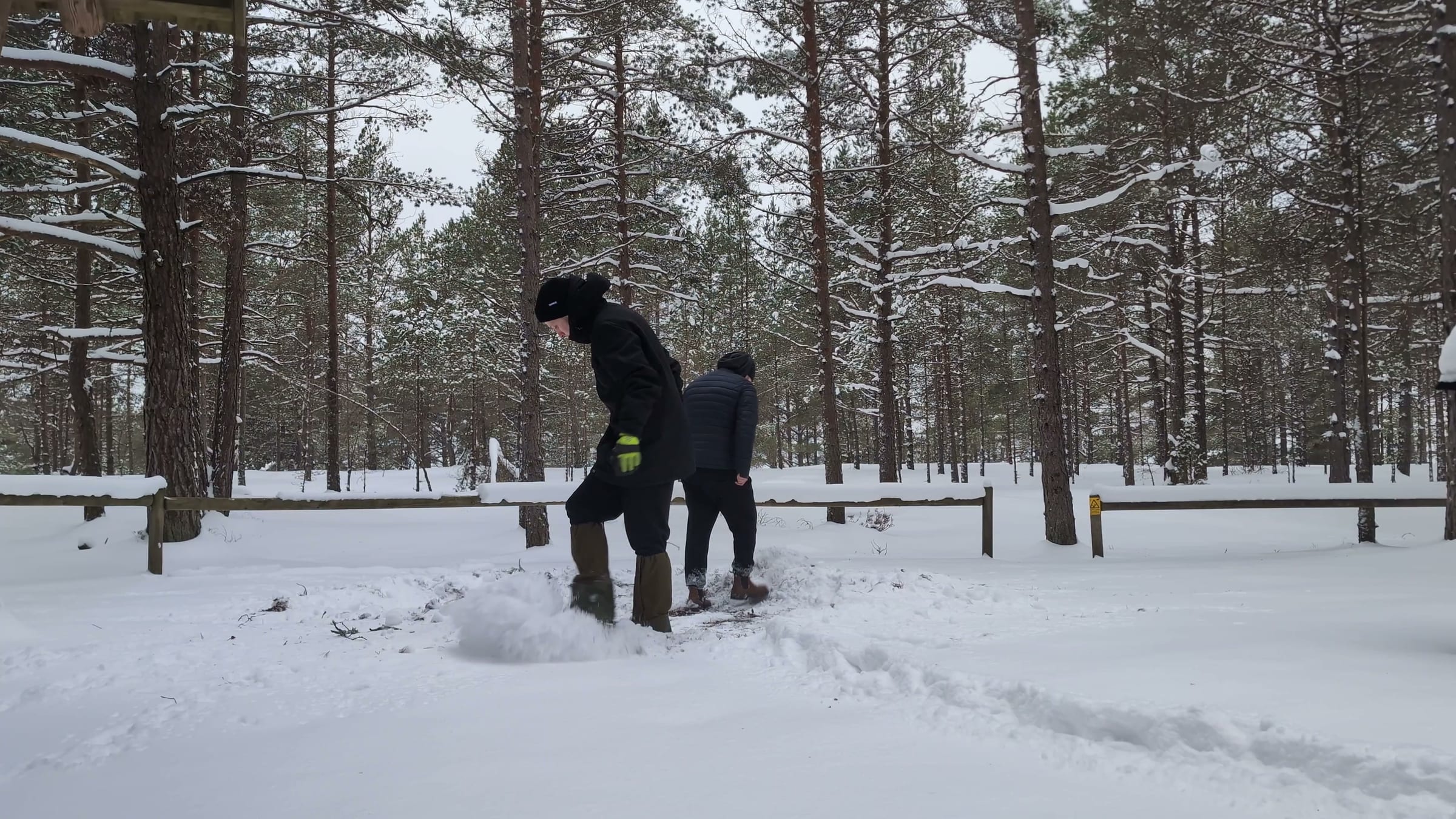
A hot tent is a tent you can run a wood stove in: a stove jack in the wall or roof lets the chimney out, and the fire inside turns a winter night from something you survive into an evening. We have slept two winters in one, in a 4 m tipi on the Estonian coast and in the Kõrvemaa forest, with a thermometer, a carbon monoxide alarm and a camera. This page is what we would tell a friend who asked whether to buy one, with the numbers we measured rather than the ones in the listings. Nothing here was given to us.
What a hot tent is
Three things make a tent a hot tent:
- A stove jack: a heat-resistant opening, usually silicone-coated glass fibre, that the chimney passes through without touching the fabric.
- Fabric that tolerates heat and sparks: canvas or polycotton on heavier tents, flame-retardant polyester on the light ones. Ours is a polyester tipi; the stove sits well away from the wall and we fit a spark arrestor on the chimney.
- Height and air: a tipi or wall tent gives you room to stand, somewhere to sit, and vents low and high so fresh air comes in and the stove's draught has somewhere to go.
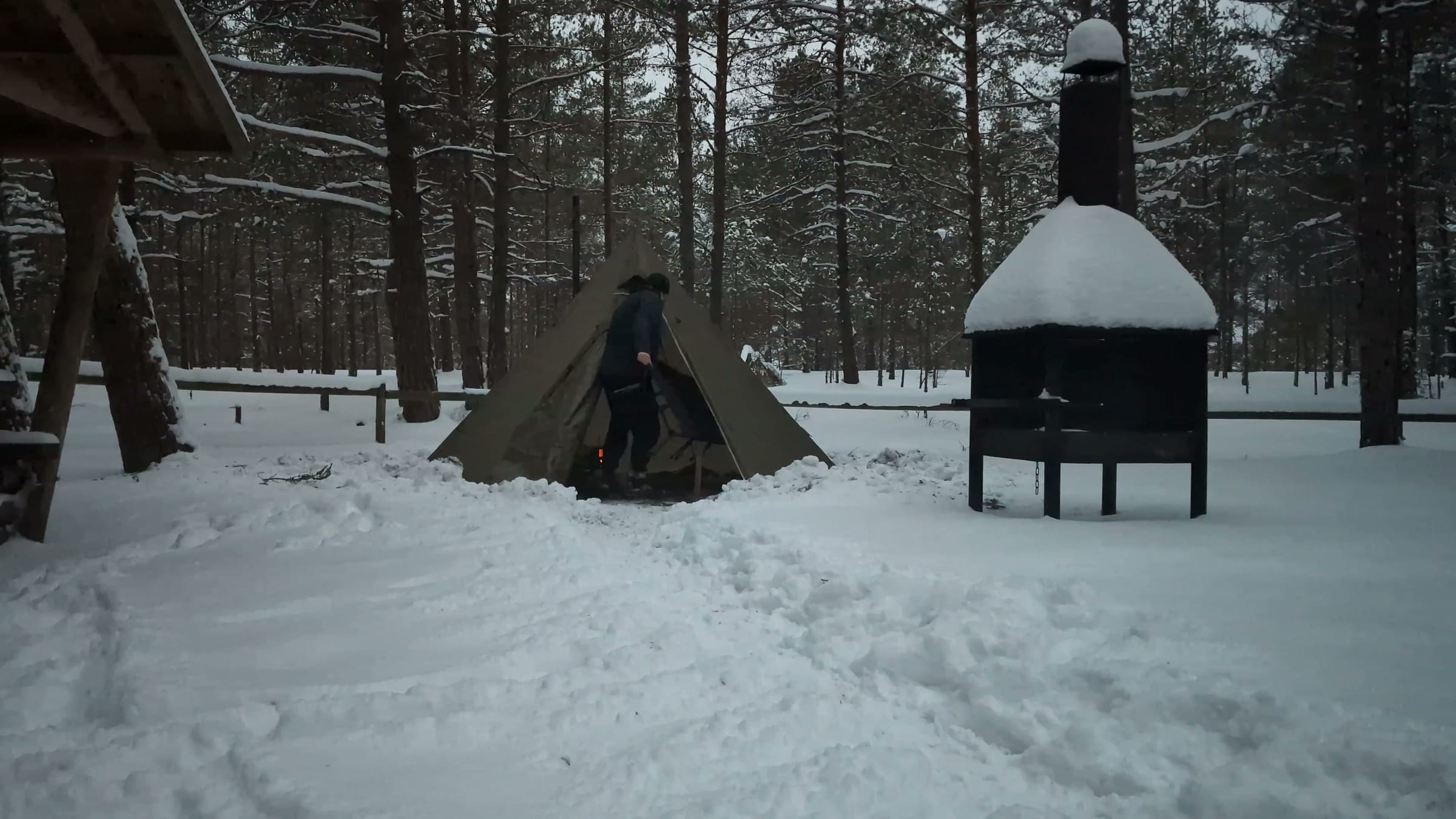
Everything else, from cots to a kitchen, is optional. The stove is the point. Our tent is an MCETO TX400 Ultra, a height-adjustable tipi 4 m across and 2.2 m high at the peak; the stove is a small stainless-steel box stove with a glass door and a telescopic chimney.
How warm it gets
With −10 °C outside at Keibu, the lowest temperature we saw inside the tent was 18 °C. That was in ordinary sleeping bags rated for 5–20 °C, on camp cots off the frozen ground, and nobody wanted a thicker bag. On our first night, at a few degrees below zero, the lesson was the other way round: with the air damper and the chimney damper wide open the chimney glowed red and the tent was too hot. A small stove swings fast; you learn the dampers in the first hour.
Two honest conditions come with the 18 °C. First, the heat lives in the air, not the ground: the floor under you is still frozen, which is why we sleep on cots rather than pads. Second, the stove only holds that temperature while someone feeds it.
The stove at night
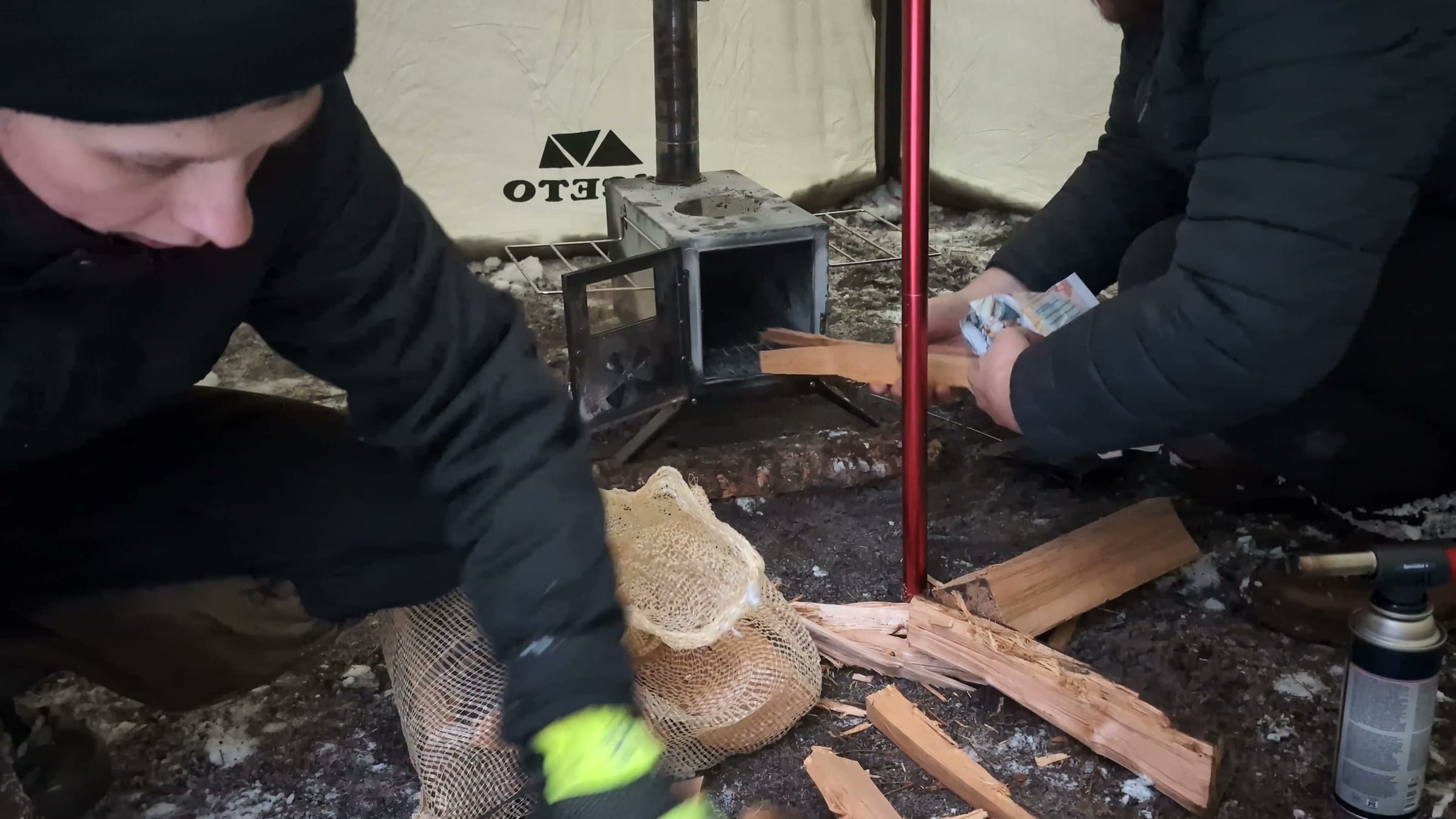
A firebox the size of ours burns a load of wrist-thick split wood in about two hours. One of us got up in the night to add wood; if nobody does, the tent is cold by morning, which is fine if your bag is rated for it and a bad surprise if it is not. Three things we learned about keeping it going:
- Split small, keep it inside. Small dry pieces burn far better than logs. The next armful lives in the tent, where it dries and warms before it goes in.
- Ash is the real limit. After a few hours the firebox is half full of ash and there is no room for wood. Our stove has no ash drawer, so the only way to keep the fire going is to scoop ash out through the door, hot, in the dark. The next stove has an ash drawer. The full story of the stove, warped chimney pipes included, is in our stove after two winters.
- Do not choke it down for the night. A fire starved of air smoulders, and a smouldering fire makes far more carbon monoxide than a bright one. Either feed it properly or let it go out.
The night the alarm went off
At Keibu the wind came off the frozen sea, so we shovelled deep snow against the tent's outer skirt to stop the draught. It worked. It also sealed the low air intake that the stove and we were breathing from. In the night the carbon monoxide alarm went off. We opened the vents, the reading dropped, and nobody was hurt. Without the alarm we would not have known, because carbon monoxide has no smell and the first symptom is sleep.
Condensation, sparks and the floor
- Condensation: a stove dries the air, so a hot tent is drier inside than a cold one with two people breathing in it. Where the tent cools at night the walls still sweat; a tipi's steep walls shed it down the fabric rather than onto you.
- Sparks: the spark arrestor on top of the chimney catches most of them. In damp weather or low pressure it also chokes the draught, so we take it off then and watch the roof. Keep the chimney away from branches.
- The floor: clear the snow down to a firm layer the size of the tent plus a margin for the stove, and stand the stove on a fireproof mat so it does not melt itself a hole. Snow stakes or buried sticks hold better than pegs.
Cooking on the stove
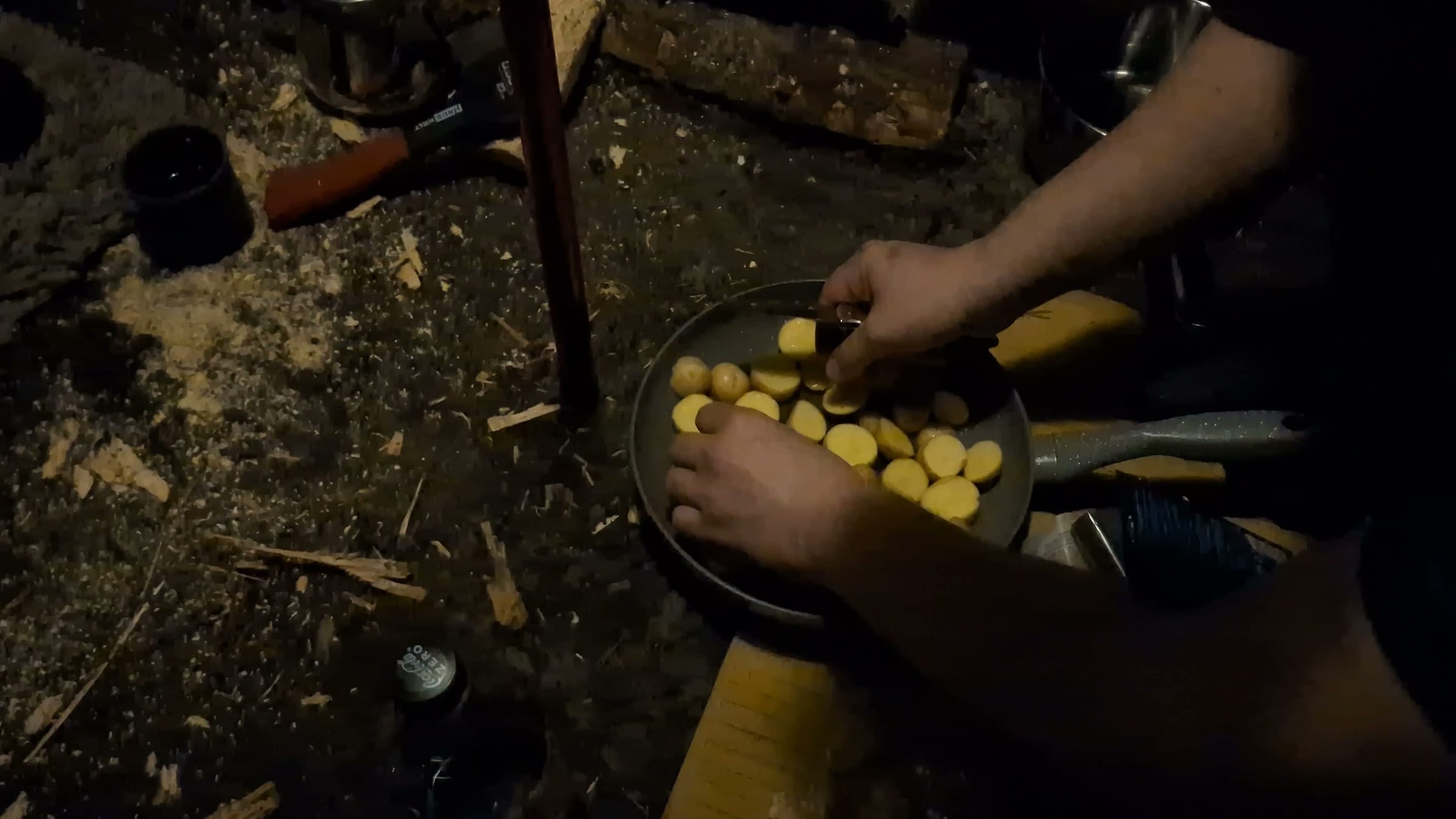
The stove top is the kitchen. Beef, potatoes and garlic in one pot for dinner; ham and eggs in the pan for breakfast. Both take longer than on a gas burner, which is fine when you are not going anywhere. Melting snow for water on a stove this size is slow; we bring water from home.
What it costs you in weight
A tipi for two, a steel stove with its chimney, two cots, firewood and water is car-camping kit. We drive to the campfire site and carry it a few metres; on walking trips the hot tent stays at home and we sleep in RMK lean-tos with a self-inflating mat. If you want to carry a hot tent, look at titanium stoves and lighter tents, and accept that a night that needs a stove also needs a lot of wood.
Where we do it
In Estonia the state forest's campfire sites and campsites are free, unbooked, and many have a car park a few metres from the fire pit, which is exactly what a hot tent wants. Bring your own firewood if you arrive by car; the woodshed is for people who walk in. The sites we have used, with what each provides, are in RMK campfire sites we have slept at. Fire is allowed only in the fire pits, and your stove counts: keep it inside the tent and the sparks under control.
Questions people ask
Is a tent stove worth it? For winter nights where you drive to the site: yes, without hesitation. It turns the evening into the best part of the trip and lets you sleep in the bags you already own. For walking trips, no; the weight goes into a warmer sleeping bag instead.
Which tent stove burns all night? None of the small ones. Ours burns about two hours per load. Longer burns need a bigger firebox, dense dry wood and an ash drawer so the box is not full of ash by midnight. Even then, plan on feeding it once.
Can you put a wood stove in any tent? No. You need a stove jack and fabric that tolerates heat; a normal nylon tent will melt or burn. Buy a tent made for it or have a jack fitted by someone who knows how.
What is a stove jack? The heat-proof sleeve in the tent wall or roof that the chimney passes through. It keeps the hot pipe off the fabric and seals around it.
How do you vent a stove in a tent? The chimney takes the smoke out above the roof; the tent needs fresh air coming in low to replace what the fire burns. Keep a low vent and a high vent open, and never seal the skirt.
Is a hot tent safe? With a carbon monoxide alarm, open vents and a fire that burns cleanly, we have found it safe enough to sleep in. The alarm is what makes the difference between a safe night and a story.
What does a hot tent cost? Our tipi and stove were at the budget end of what is sold, and after two winters the tent is fine and the stove is worn but working. Spend the first extra money on the alarm, the second on a stove with an ash drawer.
The gear from these nights, with our notes on each, is below; the two nights themselves are the films on the Keibu and Järvi Pärnjärve pages.
The gear in this article
All our gear →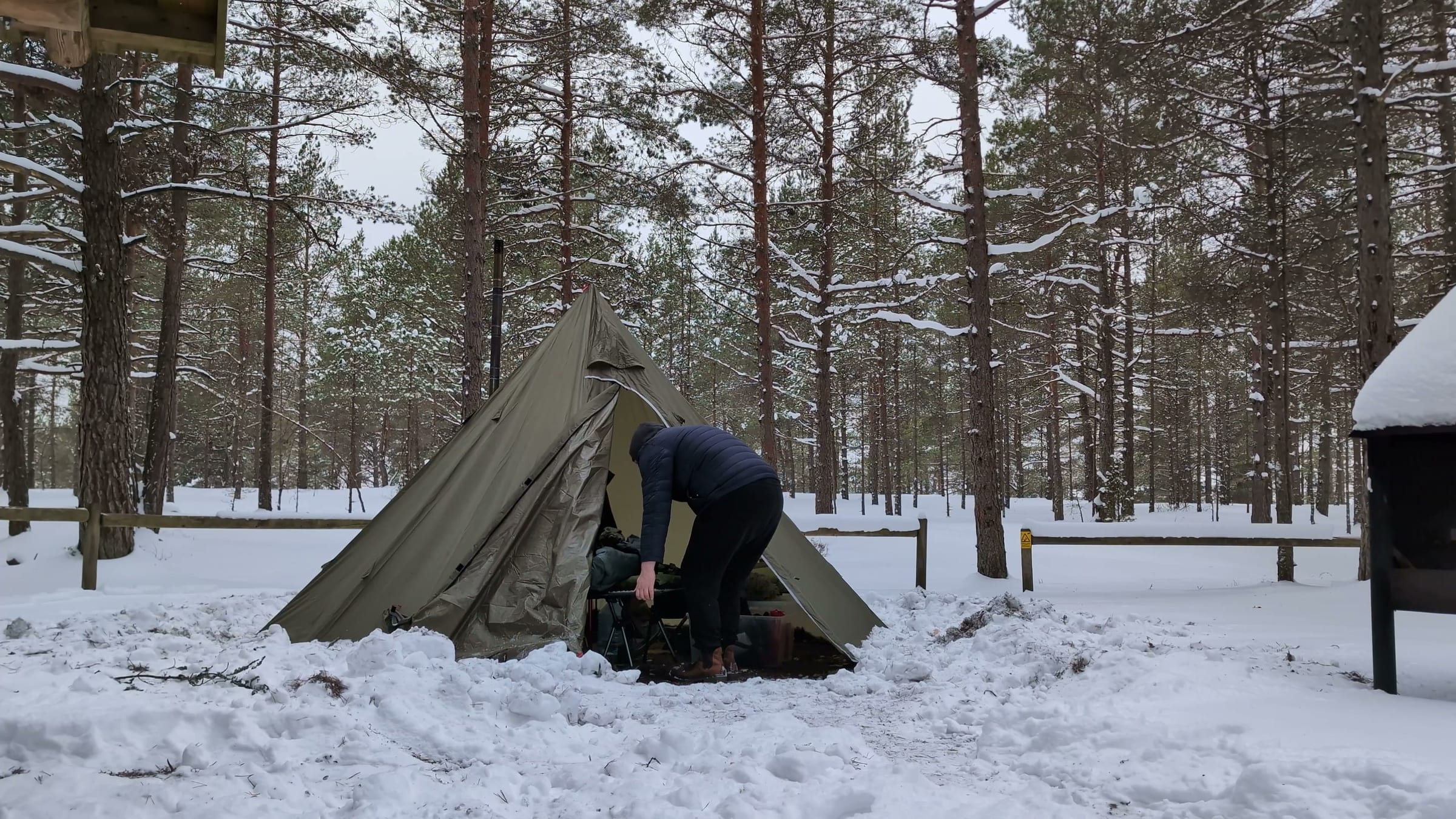
MCETO TX400 Ultra hot tent
Height-adjustable tipi, 4 m across and 2.2 m high, with a stove jack. Warm enough to sleep in light bags at −10 °C outside. Ours is MCETO's TX400 Ultra, which Amazon does not sell in Europe; the link is a similar flame-retardant tipi hot tent with a stove jack.
Stainless-steel tent stove
Ours is a near twin of this one: glass door, air damper, fold-out side shelves and a telescopic chimney that packs inside the firebox. After two winters the chimney pipes have warped and the black finish is gone; the next one has an ash drawer.
Folding camp cot with detachable legs
Off the frozen ground and away from the cold, with a mat on top. Fine to lie on; go easy on a single leg when you sit down. Ours are similar to this one.
As an Amazon Associate we earn from qualifying purchases. It costs you nothing extra.
The trips behind this guide
▶ filmCamp · Lääne-Harju coast · 16–17 January 2026 · 2 days
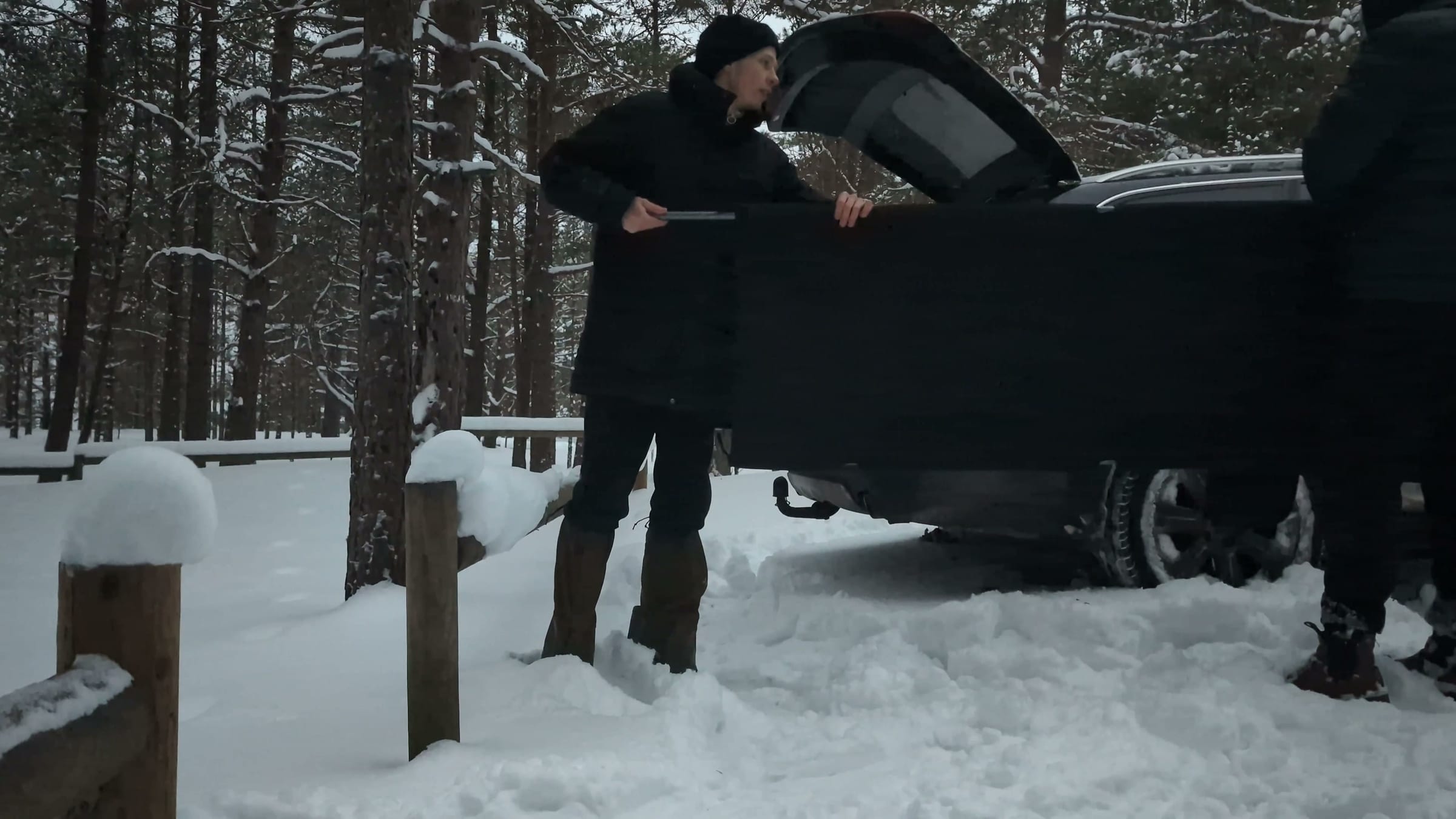
Keibu hot tent, −10 °C
A winter night in a hot tent at Keibu RMK campsite on the north-west coast: wood stove, one-pot dinner, and a carbon monoxide alarm in the night
Camp · Kõrvemaa · 22–23 November 2025 · 2 days
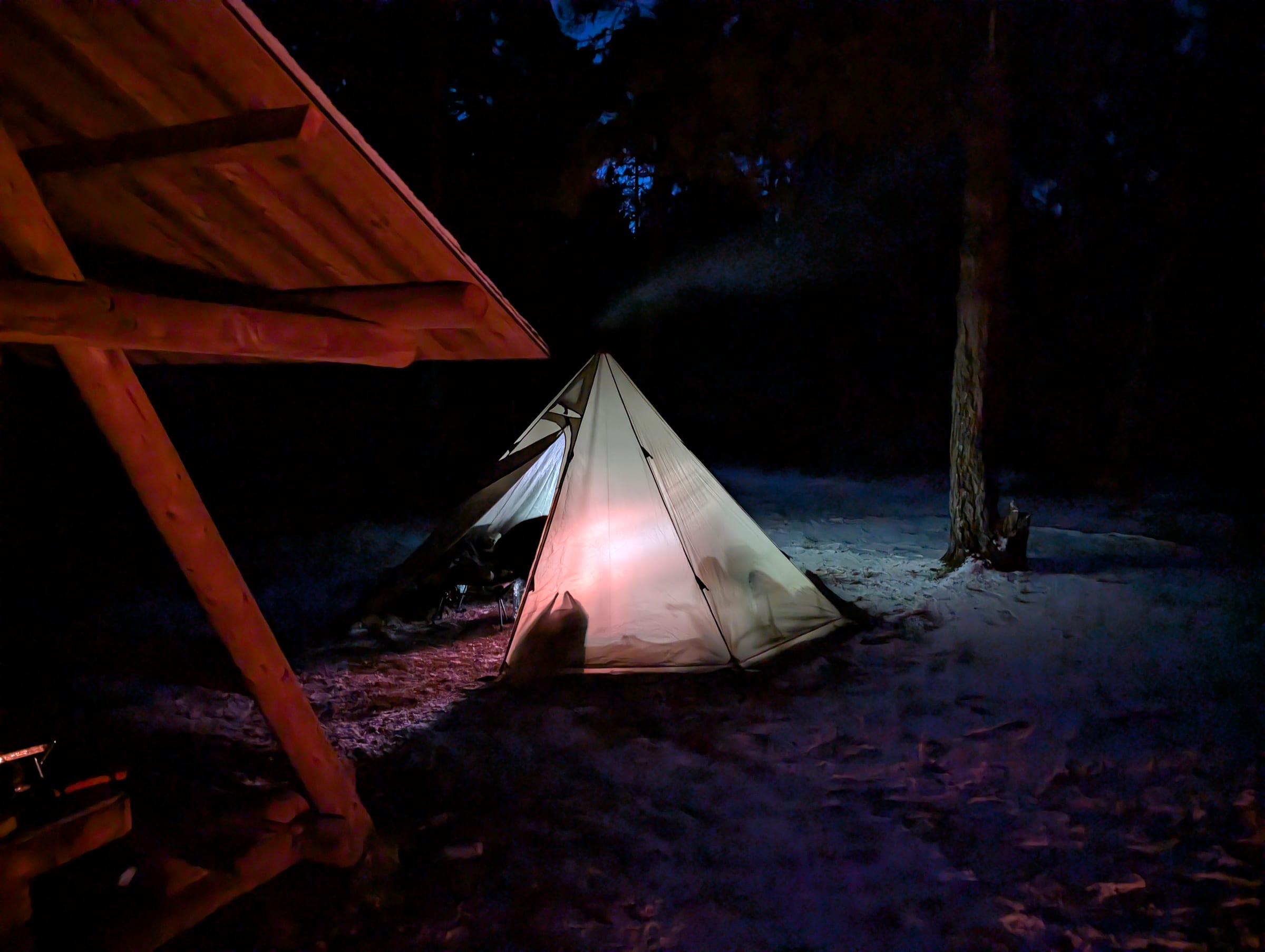
Järvi Pärnjärve: our first hot tent night
Our first night in the hot tent, at RMK's Pärnjärve campsite by the Järvi lakes in Kõrvemaa in November: learning the stove, a red-hot chimney, an empty campsite and soldiers walking past in the dark.
Sources
Practical details on this page come from these sources; check them before you go, things change.